
How Many Days in Paris? The Perfect Trip Length for Every Type of Traveler
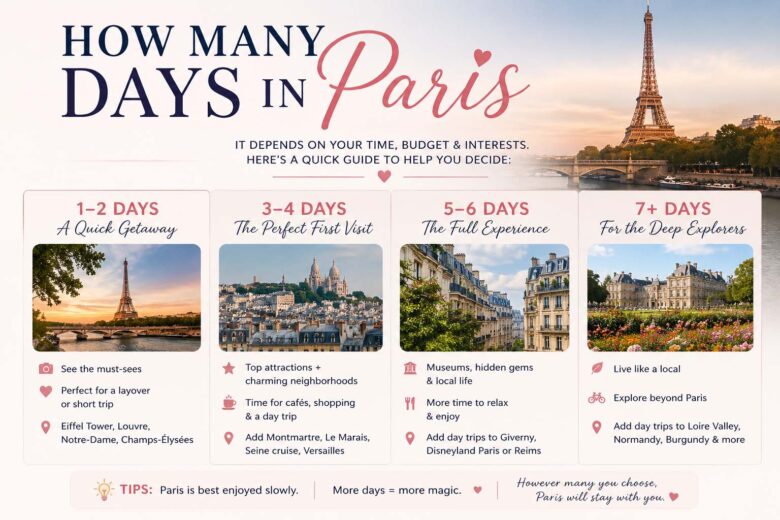
Paris has a way of making every traveler wish they had booked one more day. If you’re asking how many days in Paris you should spend, the short answer is 3 to 5 days. That gives you enough time to visit the city’s famous landmarks, enjoy its neighborhoods, slow down in cafés, and experience more than just the postcard attractions.
Still, the ideal trip depends on your travel style. Some visitors only want to see the highlights over a weekend, while others hope to explore museums, gardens, day trips, and hidden corners. Here’s how to decide what works best for your schedule and budget.
How Many Days in Paris Is Enough?
Most travelers find that 4 days in Paris offers the best balance.
Here’s a quick comparison:
| Trip Length | Best For | What You’ll Experience |
|---|---|---|
| 2 Days | Weekend visitors | Major landmarks and city highlights |
| 3 Days | First-time visitors | Main attractions plus neighborhoods |
| 4 Days | Most travelers | Relaxed sightseeing with museums and cafés |
| 5 Days | Culture lovers | Hidden gems, shopping, and local experiences |
| 6–7 Days | Slow travel | Day trips and a deeper Paris experience |
If you’re wondering how many days do you need in Paris, four days gives you enough flexibility without feeling rushed.
Why Three to Five Days Works Best
Paris isn’t a city that rewards rushing.
Many attractions sit close together, making it easy to walk between neighborhoods. At the same time, museums, gardens, cafés, and evening experiences deserve more than a quick stop.
Three to five days allows you to:
- Visit iconic landmarks
- Spend time inside world-famous museums
- Enjoy authentic French cafés
- Explore charming neighborhoods
- Take a Seine River cruise
- Experience Paris after dark
Instead of checking attractions off a list, you’ll actually enjoy them.
Suggested Paris Itineraries
2 Days in Paris
A weekend visit focuses on the essentials.
Day 1
- Eiffel Tower
- Champ de Mars
- Seine River cruise
- Arc de Triomphe
- Champs-Élysées
Day 2
- Louvre Museum
- Tuileries Garden
- Notre-Dame Cathedral area
- Latin Quarter
- Evening dinner in Saint-Germain-des-Prés
It’s busy, but you’ll cover the city’s biggest highlights.
3 Days in Paris
If you’re asking how many days should I spend in Paris for a first visit, three days is a great starting point.
Add:
- Montmartre
- Sacré-Cœur Basilica
- Moulin Rouge area
- Local markets
- More café time
You’ll experience both famous attractions and classic Parisian neighborhoods.
4 Days in Paris
This is often considered the sweet spot.
Include everything above, then add:
- Musée d’Orsay
- Luxembourg Gardens
- Le Marais
- Shopping streets
- Relaxed evenings without rushing
You can spend more time enjoying the atmosphere instead of constantly moving between attractions.
5 Days or More
With five or more days, Paris becomes less about sightseeing and more about living like a local.
Popular additions include:
- Palace of Versailles
- Disneyland Paris
- Palace of Fontainebleau
- Canal Saint-Martin
- Covered shopping passages
- Food tours
- Wine tastings
Many travelers who spend five days say it feels like the perfect pace.
Best Time to Visit Paris
Every season offers something different.
Spring (March to May)
Spring is one of the most beautiful times to visit.
You’ll enjoy:
- Blooming gardens
- Comfortable temperatures
- Outdoor cafés
- Longer daylight hours
It’s also one of the busiest travel seasons, so booking early helps.
If you’re planning more European trips, our guide to the best time to visit portugal can help you coordinate a multi-country itinerary with similar spring weather.
Summer (June to August)
Summer brings:
- Festivals
- Outdoor concerts
- Long evenings
- Peak tourist crowds
Expect higher hotel prices and longer queues at popular attractions.
Autumn (September to November)
Many experienced travelers prefer autumn.
The weather stays pleasant, crowds begin to thin, and parks fill with colorful leaves.
Photography conditions are excellent during this season.
Winter (December to February)
Winter offers:
- Christmas markets
- Holiday lights
- Lower accommodation prices
- Fewer crowds in January and February
The weather can be chilly, but indoor attractions remain enjoyable throughout the season.
Monthly Weather at a Glance
| Month | Weather | Crowds |
| January | Cold | Low |
| February | Cold | Low |
| March | Cool | Moderate |
| April | Mild | Moderate |
| May | Warm | High |
| June | Warm | High |
| July | Hot | Very High |
| August | Warm | High |
| September | Pleasant | Moderate |
| October | Cool | Moderate |
| November | Cool | Low |
| December | Cold | Moderate |
Cheapest Time to Visit Paris
If saving money matters, visit during:
- January
- February
- Early March
- November
Flights and hotels often cost less than during summer.
Avoid major holidays, Fashion Week, and Christmas if you’re looking for the lowest prices.
Travelers comparing European destinations may also enjoy reading about the best time to visit ireland, where shoulder seasons offer similar savings.
Average Travel Costs
Paris can fit different budgets depending on your travel style.
| Budget Level | Daily Cost (Per Person) |
| Budget | €90–150 |
| Mid-range | €180–300 |
| Luxury | €400+ |
Daily expenses typically include:
- Hotel
- Transportation
- Meals
- Attraction tickets
Museum passes can reduce overall costs if you plan to visit several attractions.
Where to Stay
Choosing the right neighborhood can save you both time and money.
First-Time Visitors
Stay near:
- Louvre
- Saint-Germain-des-Prés
- Le Marais
You’ll be close to many famous attractions.
Families
Look for hotels near:
- Luxembourg Gardens
- Eiffel Tower
- Invalides
These areas are quieter and have more open space.
Budget Travelers
Consider:
- Bastille
- Canal Saint-Martin
- Montparnasse
These neighborhoods usually offer better hotel prices while staying well connected.
Getting Around Paris
Paris has one of Europe’s easiest public transportation systems.
You can use:
- Metro
- RER trains
- Buses
- Walking
- Bike rentals
Walking remains one of the best ways to experience the city because many attractions are surprisingly close together.
If you’re flying internationally before arriving in France, knowing how many ounces can you take on a plane can help you avoid airport security surprises when packing toiletries.
Must-Try Paris Foods
No trip feels complete without sampling local cuisine.
Popular choices include:
- Croissants
- Pain au chocolat
- Crêpes
- French onion soup
- Steak frites
- Macarons
- Duck confit
- Cheese platters
Don’t skip neighborhood bakeries. Many locals buy fresh pastries every morning, and smaller bakeries often outperform tourist hotspots.
Packing Tips
Paris weather changes throughout the year.
Pack:
- Comfortable walking shoes
- Light rain jacket
- Layered clothing
- Universal power adapter
- Crossbody bag
- Portable charger
Even stylish travelers quickly realize comfort matters after walking several miles each day.
Family Travel Tips
Paris is much more family-friendly than many people expect.
Kids often enjoy:
- Eiffel Tower
- Luxembourg Gardens playground
- Seine cruises
- Disneyland Paris
- Carousel rides
- Aquarium de Paris
Parks throughout the city provide welcome breaks between sightseeing stops.
Solo Travel in Paris
Paris is one of Europe’s most rewarding solo destinations.
Solo travelers appreciate:
- Excellent public transportation
- Walkable neighborhoods
- Countless cafés
- Free museums on selected days
- Group walking tours
Dining alone is common, especially at cafés and bistros.
Common Mistakes to Avoid
A few simple choices can make your trip much smoother.
Avoid these common mistakes:
- Trying to see everything in two days
- Visiting the Louvre without booking tickets
- Eating only near major tourist attractions
- Underestimating walking distances
- Skipping advance reservations for popular attractions
- Packing uncomfortable shoes
Leaving room for spontaneous discoveries often creates the most memorable experiences.
Day Trips Worth Adding
If you have extra time, consider leaving the city for a day.
Excellent options include:
- Versailles
- Giverny
- Fontainebleau
- Champagne region
- Loire Valley
Travelers exploring Europe often combine France with Spain or North Africa. If that’s part of your itinerary, reading about the best time to visit morocco can help you choose the best season for both destinations.
Frequently Asked Questions
Is 3 days enough for Paris?
Yes. Three days covers the city’s major attractions while giving you time to experience a few neighborhoods at a comfortable pace.
Is 4 days better than 3?
For most visitors, yes. Four days provides extra flexibility, shorter sightseeing days, and more opportunities to enjoy Paris beyond its famous landmarks.
How many days to spend in Paris if it’s your first visit?
Most first-time visitors should plan 3 to 4 days. You’ll see the highlights without feeling constantly rushed.
How many days in Paris is enough for repeat visitors?
If you’ve already seen the major attractions, five to seven days allows you to discover local neighborhoods, markets, museums, and day trips.
Should I visit Paris before exploring other European cities?
Paris works well as either a starting point or finale for a European vacation. If you’re planning destinations outside Europe afterward, you may also want to explore Where Can I Travel Without a Passport if you’re looking for easier future travel options.
Plan the Paris Trip That Fits Your Style
There’s no single answer to how many days in Paris, but for most travelers, 3 to 5 days strikes the right balance between sightseeing and actually enjoying the city. You’ll have time to visit iconic landmarks, wander charming streets, linger over coffee, and discover why Paris continues to rank among the world’s most loved destinations.
If your schedule allows, choose four days. It gives you enough breathing room to experience Paris at a relaxed pace, leaving space for unexpected moments that often become the highlight of the trip.