
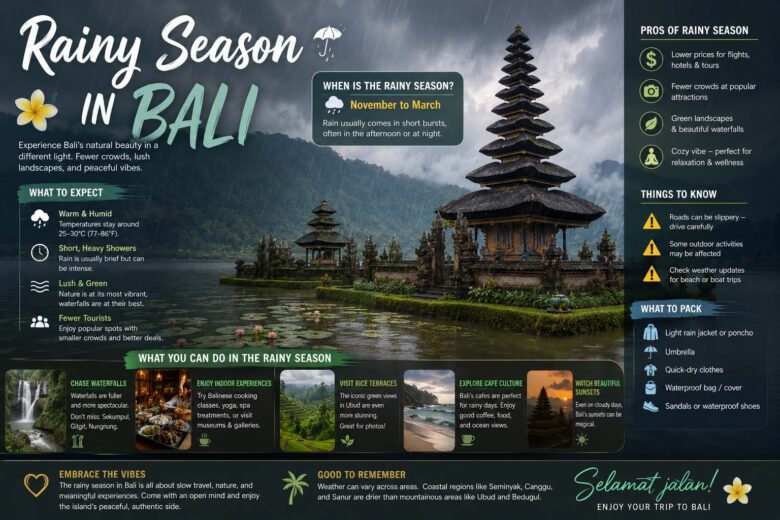
Rainy Season in Bali: What Travelers Should Know
Planning a trip during the rainy season in Bali can be a great choice if you know what to expect. While many travelers picture endless sunshine, Bali’s wet season brings a different kind of beauty.
The rainy months don’t mean constant downpours all day. Instead, most days include a mix of sunshine, humidity, and short but intense rain showers. If you’re flexible with your plans, visiting during this season can be both enjoyable and budget-friendly.
Rainy Season in Bali at a Glance
| Topic | Details |
|---|---|
| Typical Rainy Season | November to March |
| Wettest Months | December and January |
| Average Temperature | 26°C–31°C (79°F–88°F) |
| Humidity | High |
| Rain Pattern | Short tropical showers, often in the afternoon or evening |
| Crowds | Generally lower outside holiday periods |
| Prices | Often lower than peak dry-season rates |
This quick overview helps travelers decide whether Bali’s wet season matches their travel style.
When Is Rainy Season in Bali?
One of the most common questions travelers ask is when is rainy season in Bali.
The rainy season typically begins in November and continues through March. Weather patterns can shift slightly from year to year, but these months usually receive the highest rainfall.
Many mornings begin with clear skies before clouds build later in the afternoon.
If you’re comparing different travel seasons, reading about the best time to visit bali can help you understand how the island changes throughout the year.
When Is the Rainy Season in Bali at Its Peak?
If you’re wondering when is the rainy season in Bali at its wettest, the answer is usually December and January.
During these months you can expect:
- Frequent afternoon showers
- Warm temperatures
- High humidity
- Lush green scenery
- Occasional thunderstorms
Despite the rain, many visitors still enjoy excellent beach mornings and outdoor sightseeing before the weather changes later in the day.
Understanding Bali’s Tropical Climate
Bali has a tropical climate rather than four traditional seasons.
Instead, the island experiences:
- A dry season
- A rainy season
Temperatures remain warm throughout the year, so the biggest difference is rainfall instead of cold weather.
Even on rainy days, daytime temperatures are comfortable enough for swimming, sightseeing, and exploring local markets.
Month-by-Month Rainfall Overview
Knowing what to expect each month makes planning much easier.
| Month | Weather Overview |
| November | Rain begins to increase, with sunny periods still common |
| December | Heavy tropical showers and high humidity |
| January | Wettest part of the year for many regions |
| February | Frequent rain mixed with sunny mornings |
| March | Rain gradually decreases as the dry season approaches |
Conditions vary across the island, with mountainous regions generally receiving more rainfall and cooler temperatures than coastal areas.
Is the Rainy Season a Good Time to Visit?
For many travelers, yes.
The rainy season offers several advantages that are often overlooked.
Lower Accommodation Prices
Hotels, villas, and resorts frequently offer discounts outside the busiest travel months.
Luxury stays that may be expensive during peak season often become much more affordable.
Fewer Crowds
Many famous attractions feel quieter during the rainy season.
Popular temples, rice terraces, and beaches are often easier to explore without long lines or heavy traffic.
Beautiful Green Landscapes
Rain transforms Bali’s countryside.
Rice fields appear greener, forests become more vibrant, and waterfalls reach their most impressive flow.
Photographers often appreciate these dramatic landscapes.
Challenges to Consider
Although the rainy season has many benefits, it also comes with a few drawbacks.
Sudden Rain Showers
Weather can change quickly.
A sunny morning may become a rainy afternoon, so carrying a lightweight rain jacket or umbrella is always a good idea.
Higher Humidity
Humidity levels rise during the wet season.
Lightweight clothing made from breathable fabrics helps travelers stay comfortable throughout the day.
Rougher Ocean Conditions
Some beaches experience stronger waves during the rainy season.
This can affect swimming and certain water activities depending on local conditions.
If surfing is part of your travel plans, learning how to surf before your trip can help you understand wave conditions, safety basics, and beginner techniques.
Rainy Season in Bali Indonesia: What Makes It Unique?
The rainy season in Bali Indonesia differs from wet seasons in many other tropical destinations.
Instead of continuous rainfall for days, Bali often experiences short, heavy showers followed by sunshine.
Many visitors are surprised by how much sightseeing they can still fit into a single day.
This weather pattern also creates dramatic sunsets after storms clear, offering excellent photography opportunities.
Packing for the Rainy Months
Packing smart makes wet-season travel much more enjoyable.
Consider bringing:
- Lightweight waterproof jacket
- Compact umbrella
- Breathable clothing
- Quick-drying shoes or sandals
- Waterproof phone pouch
- Reusable water bottle
- Small backpack with rain cover
Since temperatures stay warm, bulky jackets are usually unnecessary.
Quick-drying clothing is much more practical than heavy fabrics.
Should Families Visit During the Wet Season?
Families can still enjoy Bali during the rainy season with a little planning.
Many attractions, restaurants, museums, shopping centers, and cultural performances remain open regardless of the weather.
Scheduling outdoor activities during the morning and indoor attractions later in the day gives families greater flexibility if afternoon showers arrive unexpectedly.
What to Do in Bali During Rainy Season
If you’re wondering what to do in Bali during rainy season, you’ll be happy to know that a little rain doesn’t stop the island from offering unforgettable experiences.
Many attractions remain open year-round, and some are even more enjoyable during the wet season.
Explore Bali’s Temples
Rain often gives Bali’s temples a peaceful atmosphere.
Popular sites such as Tanah Lot, Uluwatu Temple, and Tirta Empul can look even more dramatic with misty skies and lush surroundings. Visiting early in the morning also increases your chances of dry weather.
Visit Cafés and Local Restaurants
Bali has an outstanding café culture.
When an afternoon shower arrives, it’s the perfect excuse to relax with Indonesian coffee, fresh tropical juice, or local dishes like nasi goreng and mie goreng while watching the rain pass.
Enjoy Spa and Wellness Experiences
The rainy season is an excellent time to enjoy Bali’s famous wellness scene.
Traditional Balinese massages, flower baths, yoga studios, and wellness retreats provide relaxing alternatives when outdoor plans need to change.
Discover Waterfalls
Many waterfalls become more spectacular after periods of rainfall.
Popular choices include:
- Tegenungan Waterfall
- Tibumana Waterfall
- Banyumala Twin Waterfalls
- Sekumpul Waterfall
Always follow local safety advice, as paths can become slippery after heavy rain.
Transportation Tips During the Wet Season
Getting around Bali is still straightforward, but weather can affect travel times.
Scooters remain a popular way to explore the island, although wet roads require extra caution. If you’re unfamiliar with riding in tropical conditions, hiring a private driver or using ride-hailing services may be the safer choice.
Traffic can also become heavier during rainstorms, so allow extra time when traveling between destinations.
Budget and Accommodation Advice
One of the biggest advantages of visiting during the rainy season is the potential to save money.
Outside major holiday periods, travelers often find:
- Lower hotel prices
- Villa discounts
- Resort promotions
- Better room availability
Many luxury properties become surprisingly affordable compared with the dry season.
Booking flexible accommodation is still recommended, especially around Christmas, New Year, and other busy travel periods when demand increases.
Safety Tips for Rainy Season Travel
A little preparation goes a long way.
Keep these practical tips in mind:
- Check the daily weather forecast before long excursions.
- Wear shoes with good grip on wet surfaces.
- Keep electronics in waterproof bags.
- Drink plenty of water, even on cloudy days.
- Use mosquito repellent, especially around sunrise and sunset.
Heavy rain occasionally causes localized flooding in some areas, so it’s worth checking with your accommodation before heading out on longer trips.
Is the Rainy Season Good for Couples?
Absolutely.
Many couples enjoy Bali during the wet season because the island feels quieter and more relaxed.
Luxury resorts often offer attractive rates, making private pool villas and spa packages more affordable than during peak travel months.
Watching tropical rain from a covered terrace while surrounded by rice fields can be just as memorable as spending the entire day on the beach.
Is It Suitable for Solo Travelers?
Solo travelers can also have an excellent experience.
The island’s cafés, coworking spaces, cultural tours, and wellness activities provide plenty of opportunities to meet other visitors.
Planning flexible daily schedules is especially helpful, allowing you to adjust outdoor activities if rain arrives earlier than expected.
Comparing Bali With Other Tropical Destinations
Travelers often compare Bali with nearby destinations when planning a Southeast Asia itinerary.
For example, reading about the best month to visit thailand can help you compare seasonal weather patterns, especially if you’re deciding between multiple countries during the same trip.
Although both destinations experience tropical climates, their rainy seasons don’t always peak at exactly the same time, making it possible to plan around changing weather.
Common Mistakes to Avoid
A few simple choices can make your trip smoother, more enjoyable, and less stressful from start to finish.
Avoid these common mistakes:
- Assuming it will rain all day, every day.
- Forgetting lightweight rain gear.
- Packing heavy winter clothing.
- Scheduling every activity outdoors.
- Ignoring road conditions after storms.
Staying flexible is often the key to enjoying Bali during the wet season.
Frequently Asked Questions
Does it rain all day during the rainy season in Bali?
Usually not.
Most rain falls in short but heavy tropical showers, often during the afternoon or evening. Many mornings remain sunny and suitable for sightseeing.
Is it cheaper to visit Bali during the rainy season?
In many cases, yes.
Hotels, villas, and resorts frequently offer lower prices outside the busiest travel periods, making the rainy season attractive for budget-conscious travelers.
Can you still visit the beaches?
Yes.
Many beaches remain enjoyable, although swimming conditions vary depending on waves, tides, and local weather. Always follow safety flags and advice from lifeguards where available.
Is surfing possible during the rainy season?
Yes, although the best locations change with seasonal wind patterns. Different coasts experience better conditions at different times of the year, so checking local surf reports before heading out is recommended.
What should I pack?
Lightweight clothing, sandals, a compact umbrella, a waterproof jacket, insect repellent, sunscreen, and a waterproof bag for valuables are all useful items.
Final Travel Planning Tips
The rainy season in Bali offers a different side of the island that many travelers grow to love. While tropical showers are part of the experience, they rarely prevent you from enjoying temples, cafés, waterfalls, cultural attractions, or relaxing resort stays.
If you’re comfortable planning flexible days and packing for occasional rain, you’ll often enjoy greener scenery, lower accommodation costs, and fewer crowds than during the busiest months. With realistic expectations and a well-planned itinerary, Bali’s wet season can be every bit as rewarding as its famous dry season.