
Things to Do in Vancouver: Best Attractions, Activities & Travel Tips
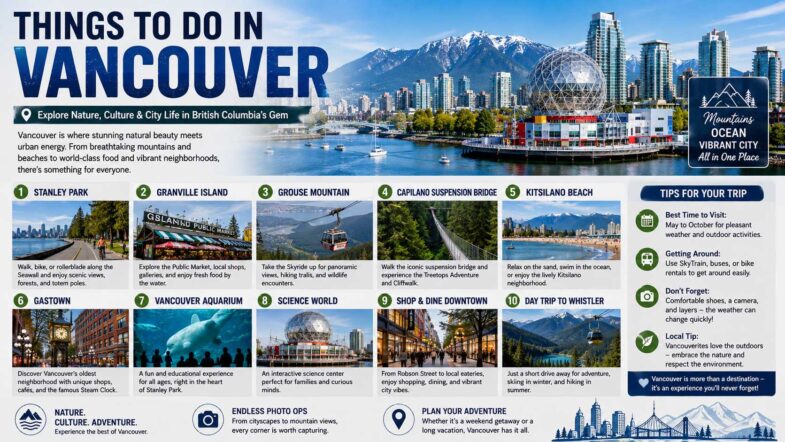
Mountains, beaches, forests, and a lively downtown all fit into one trip to Vancouver. If you are searching for the best things to do in Vancouver, start with Stanley Park, Granville Island, the waterfront, Gastown, and the city’s excellent food scene. Then, if you have extra time, add North Shore attractions or a day trip beyond the city. Vancouver is especially easy to enjoy without a packed itinerary because many of its top experiences combine sightseeing with time outdoors.
Best Things to Do in Vancouver for First-Time Visitors
Vancouver rewards travelers who mix famous attractions with relaxed neighborhood exploring. Although you could fill a week here, two to four days gives most first-time visitors enough time to experience the highlights.
Explore Stanley Park
Stanley Park is the natural starting point for many Vancouver trips. This huge urban park sits beside downtown and combines forest trails, beaches, gardens, viewpoints, and waterfront scenery.
The Seawall is one of its biggest attractions. You can walk or cycle along the waterfront while enjoying views of downtown, mountains, Burrard Inlet, and Lions Gate Bridge.
Meanwhile, families can visit the Vancouver Aquarium inside the park. Because there is plenty of open space and several easy walking areas, Vancouver deserves consideration when comparing the best places to travel with kids in Canada.
Allow at least a few hours for Stanley Park. However, outdoor lovers can easily spend most of a day here.
Wander Around Granville Island
Granville Island feels like a small neighborhood tucked beneath the Granville Street Bridge. Although the name suggests an island, it is easily accessible from central Vancouver.
The Public Market is the main attraction. Inside, you will find produce, baked goods, seafood, prepared meals, sweets, and local specialties.
However, the area offers much more than food. Independent shops, galleries, theaters, studios, and waterfront spaces make it an enjoyable place to explore slowly.
For extra fun, arrive or leave on one of the small passenger ferries that travel across False Creek.
Walk Vancouver’s Waterfront
One of Vancouver’s biggest advantages is how naturally the city connects with the water.
Start around Canada Place, where you can see the distinctive white sails of the waterfront landmark. From there, walk toward Coal Harbour for marina views and an impressive mountain backdrop.
Alternatively, explore False Creek. The waterfront paths connect several interesting areas, including Olympic Village and Granville Island.
Because many waterfront sections are free to visit, walking these routes is also an excellent way to experience Vancouver on a tighter budget.
Visit Gastown and See the Steam Clock
Gastown is Vancouver’s historic district and one of the most recognizable parts of the city.
Cobblestone-style streets, older architecture, restaurants, souvenir shops, and boutiques create a noticeably different atmosphere from the modern downtown core.
The Gastown Steam Clock is the area’s famous photo stop. However, don’t plan your entire visit around the clock. Instead, treat it as one part of a walk through the neighborhood.
Gastown is particularly pleasant when combined with the nearby waterfront, so you can cover both areas without spending much time in transit.
Discover Vancouver’s Beaches
You do not need to leave the city to spend time at the beach.
English Bay Beach is conveniently located near downtown and works well for sunset views. Meanwhile, Kitsilano Beach offers an attractive combination of water, mountains, skyline views, and a relaxed neighborhood atmosphere.
Spanish Banks and Jericho Beach are other good options when you want more space.
Summer naturally brings the liveliest beach weather. Still, a waterfront walk can be worthwhile throughout much of the year, provided you dress for the conditions.
Things to Do in Vancouver BC for Outdoor Lovers
Anyone who enjoys nature will find plenty of things to do in Vancouver BC, particularly because the North Shore mountains sit just across the harbor.
Cross Capilano Suspension Bridge
Capilano Suspension Bridge Park is one of the area’s best-known attractions. Its long suspension bridge crosses above the Capilano River, while additional forest experiences extend the visit beyond the main bridge.
Admission can make this an expensive outing for budget travelers. Therefore, compare it with other nature experiences before deciding whether it fits your trip.
Visit Grouse Mountain
Grouse Mountain offers a completely different experience depending on the season.
During warmer months, visitors come for hiking, views, and outdoor activities. Meanwhile, winter turns the mountain into a snow-sports destination.
Weather can affect visibility considerably. Therefore, check current conditions before paying for an experience primarily for the views.
If Canada’s mountain scenery is a major reason for your trip, you might also want to research the best time to visit Banff while planning a longer western Canada itinerary.
Try Lynn Canyon
Lynn Canyon is a popular alternative for travelers who want forest scenery and hiking.
The area has trails, river views, and a suspension bridge. However, conditions can be slippery during wet weather, so suitable footwear makes the experience more comfortable.
Stay on designated trails and follow local safety notices, particularly around fast-moving water and steep terrain.
Experience Vancouver’s Food Scene
Vancouver is a particularly rewarding city for travelers who plan their sightseeing around meals.
Its location on the Pacific coast means seafood features prominently. Meanwhile, the city’s diverse population has helped create excellent Chinese, Japanese, Korean, Indian, Vietnamese, Filipino, and other international dining options.
Richmond, immediately south of Vancouver, is especially well known for Asian food. Although it sits outside Vancouver proper, rapid transit makes many areas relatively easy to reach.
For casual eating, Granville Island Public Market is an obvious choice. However, neighborhood restaurants often provide a more local experience.
Try leaving at least one meal unplanned so you can choose somewhere that catches your attention while exploring.
Visit Vancouver’s Museums and Cultural Attractions
Rain is common enough in Vancouver that having indoor options makes sense.
The Museum of Anthropology at the University of British Columbia is an excellent choice for travelers interested in Indigenous arts and cultures. Meanwhile, the Vancouver Art Gallery provides an easy indoor activity in the downtown area.
Science World is especially appealing for families. Its interactive exhibits can also fill several hours when outdoor plans are disrupted by rain.
Therefore, rather than treating wet weather as a ruined day, keep one or two indoor attractions available as flexible alternatives.
Explore Vancouver’s Neighborhoods
Downtown contains many major sights, but neighborhoods show another side of Vancouver.
Kitsilano combines beaches, restaurants, shops, and residential streets. Meanwhile, Commercial Drive has a lively mix of independent businesses and places to eat.
Main Street is another good option for cafes, boutiques, restaurants, and a more local atmosphere.
Travelers comparing Canadian city breaks sometimes ask is Montreal worth visiting as well. Montreal offers a very different experience, with more historic architecture and a strong French-speaking identity, while Vancouver stands out for its immediate access to mountains, ocean, and outdoor activities.
Best Time to Visit Vancouver
There is no single perfect month because the best season depends on your plans.
| Season | What to Expect | Best For |
|---|---|---|
| Spring | Mild weather, some rain | Gardens, sightseeing, fewer summer crowds |
| Summer | Warmest and generally driest period | Beaches, cycling, hiking, outdoor activities |
| Fall | Cooler temperatures and increasing rain | Food, city exploring, fall scenery |
| Winter | Cool and wet in the city, snow in mountains | Museums and nearby winter sports |
Summer is usually the easiest season for outdoor sightseeing. However, it also brings more visitors and often higher accommodation prices.
Spring can provide a useful balance between manageable weather and smaller crowds. Meanwhile, fall works well if you are comfortable carrying a rain jacket.
Winter can be attractive for travelers combining city sightseeing with mountain activities.
Getting Around Vancouver Without a Car
Vancouver’s public transportation system includes SkyTrain, buses, and SeaBus services. Consequently, you can reach many popular areas without worrying about downtown parking.
Walking is also practical within central neighborhoods. Meanwhile, cycling works especially well around Stanley Park and sections of the waterfront.
The SeaBus between downtown Vancouver and North Vancouver is useful transportation as well as a scenic ride.
A rental car becomes more appealing if you plan several excursions outside the metropolitan area. Even then, you might rent one only for those specific days rather than throughout your stay.
Easy Day Trips from Vancouver
Once you have covered the main things to do in Vancouver, several nearby destinations can extend your trip.
Visit Whistler
Whistler is one of the best-known mountain destinations in British Columbia.
Although famous for skiing and snowboarding, it also offers hiking, mountain biking, sightseeing, and village activities during warmer months.
It is possible to visit for the day. However, spending a night gives you more time and avoids making the trip feel rushed.
Take a Trip to Victoria
Victoria sits on Vancouver Island and offers gardens, historic architecture, waterfront scenery, and a slower atmosphere than Vancouver.
Because reaching Victoria involves crossing the water by ferry or taking a flight, plan the logistics carefully. While a day trip is possible, staying overnight often makes the journey more relaxing.
A Simple 3-Day Vancouver Itinerary
On your first day, start at Canada Place and explore the waterfront before continuing toward Gastown. Later, spend the afternoon around Stanley Park and finish with sunset near English Bay.
On day two, visit Granville Island in the morning. Then explore False Creek, Kitsilano, or another neighborhood before enjoying Vancouver’s restaurant scene in the evening.
Use day three for the North Shore. Depending on your interests and budget, choose Grouse Mountain, Capilano Suspension Bridge, or Lynn Canyon.
If you have a fourth day, consider Whistler, Richmond, more neighborhood exploring, or a slower beach and park day.
Travelers who enjoy building city-focused itineraries may also find guides covering things to do in Philly useful when planning future North American city breaks.
How Much Should You Budget?
Vancouver can be expensive, particularly for accommodation.
Hotels in convenient downtown locations often represent the largest part of a visitor’s budget. Therefore, booking early can help during the busy summer season.
Food costs vary considerably. You can spend heavily at upscale restaurants, but food courts, markets, cafes, and casual Asian restaurants provide less expensive alternatives.
Fortunately, many of Vancouver’s best experiences cost little or nothing. Stanley Park, beaches, neighborhood walks, and waterfront areas can fill substantial portions of an itinerary without admission fees.
Balance a few paid attractions with free outdoor experiences to keep costs manageable.
Vancouver Travel Tips That Make a Difference
Pack a light waterproof layer even if the forecast looks reasonable because Vancouver weather can change quickly.
Also, wear comfortable walking shoes. The city is easy to explore on foot, and you may end up covering more distance than expected.
If you visit in summer, reserve popular accommodations and major activities ahead of time. Conversely, during wetter months, keep your daily schedule flexible so you can move indoor attractions around the weather.
Visitors planning several North American destinations may notice that each city requires a different approach. For instance, travelers researching things to do in Memphis are likely to build a trip around music, history, and food, while Vancouver itineraries naturally lean toward waterfronts, parks, mountains, and outdoor recreation.
Things to Do in Vancouver Canada: FAQs
How many days do you need in Vancouver?
Three days works well for the main highlights. However, four or five days gives you time for neighborhoods, North Shore attractions, and a day trip without rushing.
Is Vancouver expensive to visit?
It can be, especially when accommodation prices are high. Still, free attractions such as Stanley Park, beaches, and waterfront walks make it possible to control daily sightseeing costs.
Is Vancouver good for families?
Yes. Stanley Park, the Vancouver Aquarium, Science World, beaches, parks, and easy transportation provide plenty of family-friendly options.
Can you visit Vancouver without a car?
Yes. In fact, many visitors are better off without one when staying mainly in the city. Public transit, walking, cycling, and passenger ferries cover many popular areas.
What are the best free things to do in Vancouver?
Stanley Park, the Seawall, English Bay, Kitsilano Beach, Gastown, Canada Place, and neighborhood walks are among the easiest free activities to add to an itinerary.
Is Vancouver BC the same as Vancouver Washington?
No. Vancouver, British Columbia, is a major Canadian city on Canada’s Pacific coast. Vancouver, Washington, is a separate U.S. city directly north of Portland, Oregon. Therefore, searches for things to do in Vancouver WA or things to do in Vancouver Washington refer to a completely different destination.
Make Your Vancouver Trip Fit Your Travel Style
The best things to do in Vancouver depend on whether you prefer outdoor adventures, food, family attractions, cultural experiences, or relaxed sightseeing. However, most first-time visitors should make room for Stanley Park, the waterfront, Granville Island, Gastown, and at least one experience that brings them closer to the mountains.
Rather than filling every hour, leave some flexibility for good weather. Vancouver is at its best when you can change plans for a waterfront bike ride, an unexpected neighborhood restaurant, or a clear afternoon in the mountains. With three or four well-planned days, you can experience the city’s major highlights without turning the trip into a race between attractions.