
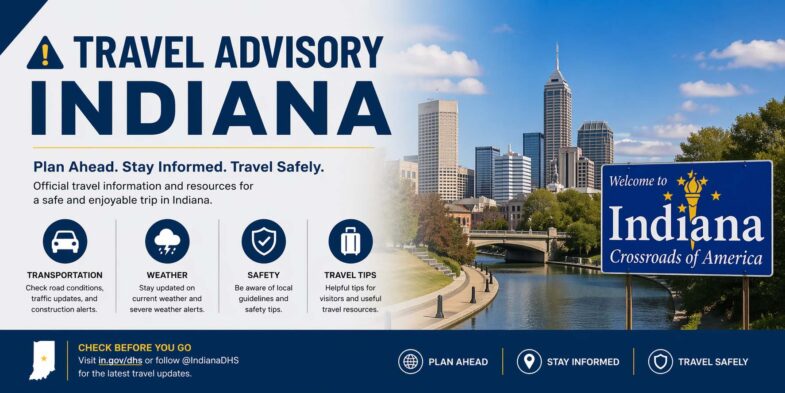
Travel Advisory Indiana Guide
A travel advisory Indiana update is an important resource for residents, commuters, and visitors who need current road and weather safety information. Travel advisories help people make smart decisions during storms, flooding, heavy snow, ice, tornado threats, construction delays, and other emergencies that may affect transportation.
Indiana experiences changing weather throughout the year, including winter snow, spring storms, and summer flooding in some regions. Because of this, state and local officials may issue advisories to warn travelers about dangerous conditions. Knowing how these alerts work can help you stay safe and avoid unnecessary risks.
What Is a Travel Advisory?
A travel advisory is an official warning or recommendation issued by government agencies or local authorities when road conditions or public safety concerns affect travel. These notices are designed to inform people whether travel should continue as normal or be limited.
Advisories may be issued for:
- Snow and ice storms
- Flooded roads
- Tornado damage
- Dense fog
- Hazardous wind conditions
- Major accidents or closures
- Infrastructure emergencies
A travel advisory Indiana notice often changes as conditions improve or worsen, so checking updates regularly is important.
Why Indiana Uses Travel Advisories
Indiana has a large network of highways, rural roads, city streets, and interstate routes. Because weather conditions can vary by county, advisories help communicate local risks quickly.
Northern Indiana may face lake-effect snow during winter. Central Indiana can experience freezing rain and storms. Southern Indiana may deal with flooding and severe weather. Travel advisories allow each county to respond based on actual local conditions.
These alerts help reduce accidents, improve emergency response, and keep drivers informed.
Indiana Travel Advisory Levels
Indiana counties often use a three-level advisory system. Exact wording may vary, but common levels include:
Advisory
This level means travel may be restricted to essential trips due to hazardous conditions. Drivers should use caution.
Watch
Conditions are threatening to safety. Travel should be limited to necessary trips only. Roads may be dangerous.
Warning
Travel may be restricted to emergency personnel or essential workers only. Conditions are severe and unsafe.
Always follow official instructions when advisories are issued.
Indiana Travel Advisory Map
The indiana travel advisory map is one of the most useful tools for checking county-by-county conditions. This map visually displays advisory levels across the state so travelers can quickly understand where risks exist.
Color-coded maps are often easier to read than text-only updates. They help users plan routes, avoid restricted areas, and identify safer travel options.
Before driving long distances, checking the map can save time and improve safety.
Current Indiana Travel Advisory Map
The current indiana travel advisory map is especially valuable during winter storms or fast-changing emergencies. Because weather can shift quickly, a map from earlier in the day may no longer be accurate.
Travelers should review the latest updates before leaving home, especially during:
- Snowfall
- Ice accumulation
- High wind warnings
- Heavy rain
- Flash flooding
- Tornado recovery efforts
Using the most recent information helps reduce risk.
Travel Advisory Map Indiana for Road Trips
If you are planning a road trip, the travel advisory map indiana can help you choose the safest route. For example, one county may have hazardous roads while nearby counties remain clear.
Checking advisories before traveling can help with:
- Route planning
- Departure timing
- Hotel decisions
- Fuel planning
- Emergency preparation
Even if your starting point is clear, conditions ahead may be different. Families planning road trips may also research the best places to travel with kids. Travelers needing lodging may also check how old do you have to be get a hotel room.
Where to Find Indiana Travel Advisories
Reliable sources for Indiana travel updates often include:
- State government transportation websites
- County emergency management pages
- Official weather services
- State police alerts
- Local news stations
- Verified social media emergency accounts
Always rely on trusted official sources rather than rumors or outdated posts online.
Winter Travel in Indiana
Winter is one of the busiest seasons for travel advisories. Snow and ice can make roads slippery and dangerous, especially bridges, overpasses, and rural highways.
Tips for winter travel:
- Slow down and increase following distance
- Keep fuel tank partly full
- Carry blankets and emergency supplies
- Charge your phone before leaving
- Check tires and wipers
- Avoid unnecessary travel during warnings
Even experienced drivers should use caution during freezing weather. A compact Saco de Dormir can also be useful during winter travel.
Flood and Storm Travel Safety
Indiana can also face severe thunderstorms and flooding. Roads covered by water may be deeper or faster-moving than they appear.
Important reminders:
- Never drive through flooded roads
- Watch for downed power lines
- Avoid storm-damaged areas
- Follow detour signs
- Stay informed through weather alerts
A short delay is safer than taking unnecessary risks.
Travel Tips for Visitors
If you are visiting Indiana for business, sports, or tourism, checking travel advisories is a smart habit. Weather may differ from your home region, especially during winter.
Visitors should also consider:
- Rental car readiness
- Hotel cancellation flexibility
- Airport delays
- Local road knowledge
- Backup routes
Planning ahead can make travel smoother and safer. Those comparing domestic destinations may ask Where Can I Travel Without a Passport. Air travelers may also review how many ounces can you take on a plane.
Why Travel Advisories Matter
Travel advisories protect both the public and emergency responders. Fewer unnecessary vehicles on dangerous roads allow snowplows, police, ambulances, and utility crews to work more efficiently.
Ignoring warnings can lead to accidents, stranded vehicles, and delayed emergency assistance. Even short trips can become dangerous during severe weather.
Conclusion
A travel advisory Indiana alert is an essential tool for staying safe on the road. Whether checking the indiana travel advisory map, reviewing the current indiana travel advisory map, or using the travel advisory map indiana before a trip, updated information can help prevent accidents and delays.
Before traveling in Indiana, especially during storms or winter weather, always check official updates and plan carefully. Safe travel starts with smart decisions and reliable information.