
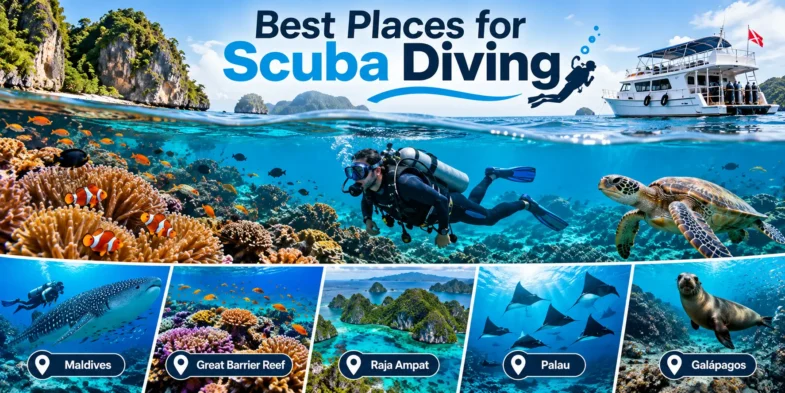
Best Places for Scuba Diving: Incredible Destinations Around the World
The best places for scuba diving can take you from colorful tropical reefs to dramatic underwater walls, shipwrecks, volcanic landscapes, and encounters with manta rays, sharks, turtles, and huge schools of fish. However, the right destination depends on more than marine life alone. Water conditions, season, certification level, travel costs, visibility, and accessibility can all shape your experience.
For first-time divers, calm water and professional dive centers may matter most. Meanwhile, experienced travelers might prioritize remote reefs, strong-current drift dives, or large pelagic species. Therefore, instead of choosing a destination simply because it looks spectacular online, match the location to your experience level and preferred type of diving.
Best Places for Scuba Diving: Quick Comparison
The following destinations offer very different underwater experiences, so this overview can help narrow your options before planning a trip.
| Destination | Best Known For | Typical Skill Level | Good Time to Consider |
|---|---|---|---|
| Great Barrier Reef, Australia | Coral reefs, turtles, marine diversity | Beginner to advanced | Varies by region |
| Maldives | Manta rays, whale sharks, channels | Beginner to advanced | Seasonal conditions vary |
| Hawaii, USA | Turtles, volcanic terrain, manta dives | Beginner to advanced | Year-round possibilities |
| Cozumel, Mexico | Drift diving, clear water, reef walls | Intermediate-friendly | Generally year-round |
| Bonaire | Easy shore diving | Beginner to advanced | Year-round |
| Red Sea, Egypt | Reefs, wrecks, clear water | Beginner to advanced | Year-round |
| Raja Ampat, Indonesia | Exceptional reef biodiversity | Intermediate to advanced | Seasonal |
| Costa Rica | Pelagic marine life | Intermediate to advanced | Varies by coast/site |
Conditions can change from year to year and even from day to day. Therefore, always confirm local weather, currents, marine conditions, and dive-site requirements with a reputable operator before traveling.
Great Barrier Reef, Australia
Australia’s Great Barrier Reef is an obvious starting point when discussing the best places for scuba diving in the world. Its enormous reef system offers everything from introductory dives to multi-day liveaboard trips.
Cairns and Port Douglas are popular gateways. From these areas, travelers can reach outer reef locations where coral formations, reef fish, turtles, and other marine species may be encountered.
Beginners can choose supervised dives at suitable sites, while certified divers can explore more varied locations. Meanwhile, experienced travelers may prefer a liveaboard because it can provide access to sites farther from the mainland.
Since conditions differ between Australia’s regions, trip timing deserves some research. A broader guide to the best time to visit australia can help you coordinate diving with weather and the rest of your itinerary.
Maldives: Reefs, Mantas, and Island Diving
The Maldives combines a tropical island vacation with an impressive selection of dive environments. Divers can explore reefs, channels, pinnacles, and cleaning stations, while marine encounters can include reef sharks, rays, turtles, and large schools of fish.
However, currents can be powerful at some sites. As a result, beginners should not assume every famous Maldivian dive location suits their experience level.
Fortunately, resort islands and local islands often have dive centers that can recommend calmer sites. Meanwhile, more experienced divers can seek channel dives and other current-influenced locations.
Season also affects conditions and marine-life patterns. Therefore, checking the best time to visit maldives before booking can help you balance diving plans with rainfall, visibility, resort prices, and other travel priorities.
Hawaii: One of the Best Places for Scuba Diving in USA
Hawaii deserves a strong place among the best places for scuba diving in USA because its volcanic islands create underwater environments quite different from classic coral destinations.
The Big Island is especially known for nighttime manta-ray experiences. Meanwhile, Maui offers reefs, lava formations, and access to Molokini, while Oahu combines reef diving with several wreck-diving possibilities.
Hawaii can also work well for groups where not everyone scuba dives. Beaches, hiking, snorkeling, scenic drives, and cultural attractions give non-divers plenty to do.
In fact, travelers who want easier surface-based marine activities can explore the best places to snorkel in hawaii as part of the same vacation.
Although diving is possible during different parts of the year, ocean and weather conditions still change seasonally. Therefore, reviewing the best time to visit hawaii can help when coordinating diving with your wider island itinerary.
Cozumel, Mexico
Cozumel is particularly famous for drift diving. Instead of constantly swimming against the water, divers often move naturally with the current while following reefs and walls.
Visibility can be excellent, which makes the underwater scenery especially enjoyable. Meanwhile, the island has a well-developed tourism infrastructure, so finding accommodation, restaurants, and dive operators is relatively straightforward.
However, drift diving requires good buoyancy control and comfort in moving water. Therefore, inexperienced divers should tell the operator about their certification level and number of logged dives.
Cozumel also pairs easily with a longer Mexico vacation. Travelers can combine several diving days with beaches, mainland excursions, or time elsewhere along the Caribbean coast.
Bonaire: A Favorite for Independent Shore Diving
Bonaire stands apart because many sites are accessible directly from shore. Consequently, certified divers who value flexibility can build their own daily schedule rather than relying entirely on boat departures.
That freedom makes Bonaire attractive for repeat divers. You can often spend the morning diving, take a long break, and return to the water later without organizing your whole day around a boat timetable.
However, shore entries vary. Rocky surfaces, waves, and equipment handling can make some locations less comfortable for beginners.
For that reason, first-time visitors may benefit from guided dives before exploring more independently. Once familiar with local procedures and conditions, experienced divers can take greater advantage of the island’s flexible setup.
Red Sea, Egypt
The Red Sea offers warm-water diving, colorful reefs, excellent visibility at many sites, and famous wrecks. Therefore, it appeals to both travelers planning a dedicated diving vacation and those adding underwater activities to a wider Egypt trip.
Sharm El Sheikh and Hurghada are among the best-known bases. Meanwhile, Marsa Alam attracts travelers who prefer access to southern Red Sea locations.
Some sheltered sites work well for relatively inexperienced divers. In contrast, deeper wrecks, walls, and current-affected locations require suitable training and experience.
Liveaboards are another popular option. However, travelers should compare routes carefully because itineraries may target very different experience levels.
Raja Ampat, Indonesia
For experienced divers focused heavily on marine biodiversity, Raja Ampat is often high on the wish list. This remote Indonesian region features coral reefs packed with marine life, dramatic underwater scenery, and an enormous variety of fish.
The trade-off is accessibility. Reaching Raja Ampat generally takes more planning than traveling to a major resort destination. Likewise, accommodation and dive packages can represent a significant part of the trip budget.
Currents can also become challenging at certain sites. Therefore, travelers should choose operators and itineraries that match their experience rather than selecting a trip solely from photographs.
For committed divers, though, the journey can offer days centered almost entirely around underwater exploration.
Costa Rica for Pacific Ocean Diving
Costa Rica is often associated with rainforests, wildlife, surfing, and volcanoes, yet its Pacific coast also offers interesting scuba opportunities.
Instead of focusing mainly on colorful coral gardens, many Costa Rican sites appeal to travelers hoping for encounters with larger marine species. Depending on the location and season, divers may encounter rays, sharks, turtles, and schooling fish.
However, visibility and water conditions can vary. Consequently, expectations should differ from destinations known primarily for consistently clear tropical water.
Weather patterns also affect a Costa Rican trip. If diving forms part of a broader vacation, checking the best time to go to costa rica can help you plan around rainfall, regional differences, and the activities you want to combine with your dives.
More of the Best Places in the World for Scuba Diving
Beyond the major destinations above, several other regions deserve consideration.
The Philippines offers an enormous variety of diving, from reefs and macro life to wrecks and larger marine encounters. Palau, meanwhile, is known for walls, channels, and pelagic action, although currents can make some sites better suited to experienced divers.
Belize provides Caribbean reef diving and access to the Belize Barrier Reef. Meanwhile, Fiji is known for colorful soft corals and varied reef environments.
Indonesia also extends far beyond Raja Ampat. Bali, Komodo, and other areas provide very different underwater experiences, although some locations feature strong currents.
Therefore, there is no single destination that works best for every diver. Your certification, interests, budget, and available travel time should shape the choice.
Best Places for Beginner Scuba Diving
The best places for beginner scuba diving generally combine calm conditions, manageable depths, accessible training, and established dive operations.
Bonaire can be beginner-friendly when diving with appropriate guidance, especially because many sites offer straightforward access. Likewise, selected locations in Hawaii, the Maldives, Australia, and the Red Sea can accommodate new divers.
Still, a destination should not be labeled beginner-friendly as a whole. Conditions can change significantly from one dive site to another.
For example, one Maldivian house reef may provide a relaxed experience while a nearby channel has much stronger currents. Similarly, a Hawaiian protected reef can feel completely different from an exposed offshore site.
Therefore, new divers should ask operators about current strength, entry method, maximum depth, boat conditions, and expected visibility before reserving a dive.
How to Choose the Right Scuba Destination
Start by deciding what you most want to see. If coral biodiversity is your priority, destinations such as Raja Ampat, the Great Barrier Reef, and the Red Sea may stand out. On the other hand, travelers interested in manta rays may focus more heavily on Hawaii or the Maldives.
Next, consider your certification and experience. Some destinations provide a broad selection of beginner-friendly sites, while others become much more rewarding after you gain confidence with currents and deeper dives.
Travel style matters too. A resort-based trip offers convenience, whereas a liveaboard maximizes time on the water. Meanwhile, destinations such as Bonaire appeal to independent travelers who enjoy flexible shore diving.
Finally, calculate the full cost rather than just the flight. Equipment rental, dive packages, marine park fees, transfers, accommodation, insurance, meals, and tips can all affect the final budget.
When Is the Best Time to Plan a Scuba Trip?
Seasonal conditions vary dramatically by destination. Therefore, there is no universal “scuba season.”
In tropical areas, water may remain warm throughout much of the year, yet rainfall, wind, currents, and visibility can change between seasons. Meanwhile, specific marine species may appear more frequently during particular periods.
Avoid planning exclusively around one promised wildlife encounter. Wild animals move naturally, so no ethical operator can guarantee a specific sighting.
Instead, choose a season that provides generally suitable conditions while treating special encounters as a bonus.
What to Pack for a Diving Vacation
Even when renting major equipment, a few personal items can make the trip easier.
Bring your certification details, logbook if you use one, swimwear, reef-conscious sun protection, a reusable water bottle, and appropriate clothing for boat trips. Likewise, a lightweight dry bag can protect your phone and travel documents from spray.
If you own a mask that fits particularly well, bringing it can improve comfort. However, check airline baggage limits before packing heavy equipment such as regulators, fins, or buoyancy equipment.
Divers should also consider suitable travel insurance. Read the policy carefully because coverage for scuba activities can depend on certification, depth, destination, and the type of diving involved.
Scuba Diving Safety and Responsible Travel
Always dive within your training and personal comfort level. Even experienced divers should listen carefully to local briefings because currents, entries, exits, and hazards differ between sites.
Likewise, avoid touching coral or chasing marine animals for photographs. Good buoyancy control protects both the diver and fragile underwater environments.
Choose established operators that maintain equipment, provide clear safety briefings, and organize groups appropriately. Also, leave enough time between diving and flying based on recognized diving guidance and the advice relevant to your dive profile.
Common Questions About Scuba Diving Destinations
Where is the best scuba diving in the world?
There is no single answer because divers value different experiences. Raja Ampat attracts biodiversity-focused travelers, while the Maldives is known for channels and large marine species. Meanwhile, Australia offers an enormous reef system, and the Red Sea combines reefs with famous wrecks.
Where should a beginner go scuba diving?
Beginners should prioritize reputable instruction, calm sites, manageable depths, and simple entry conditions. Suitable locations exist in Bonaire, Hawaii, Australia, the Maldives, and the Red Sea, although specific site conditions matter more than the destination name alone.
Is Hawaii good for scuba diving?
Yes. Hawaii offers volcanic underwater terrain, reefs, turtles, wrecks, and well-known manta-ray experiences. Since the islands also offer many land activities, Hawaii works particularly well for mixed groups of divers and non-divers.
Do I need certification to scuba dive while traveling?
Certification is generally required for independent recreational diving and many standard guided dives. However, some professional dive centers offer supervised introductory experiences for non-certified participants under specific conditions. Requirements vary, so confirm the details directly with the operator.
Pick the Destination That Matches Your Diving Style
The best places for scuba diving are not necessarily the hardest or most remote destinations. Instead, the right choice is the place that matches your training, travel budget, preferred marine life, and comfort in the water.
Beginners may enjoy an accessible reef destination with professional instruction, while experienced divers may prefer current-heavy channels, remote reefs, or liveaboard itineraries. Either way, research seasonal conditions before booking, choose a reputable dive operator, and leave flexibility in your schedule in case the ocean changes your plans.