
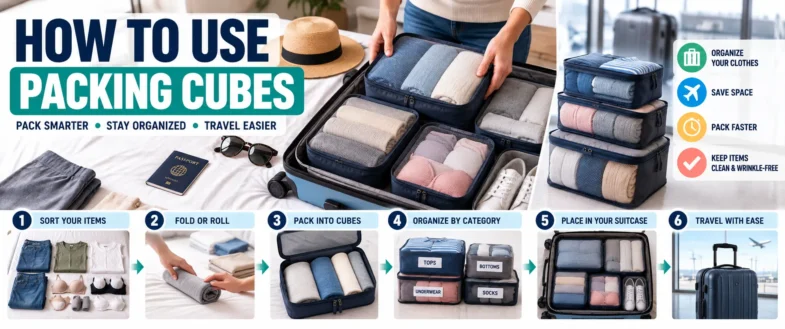
How to Use Packing Cubes for Easier, More Organized Travel
Opening a suitcase and finding clothes, socks, chargers, and toiletries mixed into one messy pile can make even a relaxing trip feel frustrating. Fortunately, learning how to use packing cubes gives every item a designated place while making it easier to unpack, repack, and find what you need. Packing cubes work for carry-ons, checked luggage, weekend bags, and backpacks, while the right system can also help you avoid taking more clothing than you actually need.
Although packing cubes are simple zippered organizers, the way you fill and arrange them makes a noticeable difference. Therefore, rather than stuffing everything into the largest cube, use different sizes for specific categories and organize them around how you will travel.
What Are Packing Cubes and How Do They Work?
Packing cubes are lightweight fabric containers designed to organize items inside luggage. Most sets include several sizes, while some cubes have mesh panels that let you see their contents.
Instead of placing individual clothes directly into your suitcase, you group similar items inside each cube. For example, one cube might contain shirts, another could hold underwear and socks, and a third could store pants.
As a result, you can remove one organizer without disturbing everything else.
Packing cubes also make hotel changes easier. Rather than unpacking every item into drawers, you can place the cubes directly inside a wardrobe or keep them neatly arranged in your suitcase.
However, standard cubes do not magically reduce the weight of your luggage. They mainly organize space, although compression versions can reduce the volume occupied by bulky clothing.
How to Use Packing Cubes Step by Step
The easiest system starts before anything goes into your suitcase. Therefore, lay out everything you plan to bring and remove unnecessary items first.
Step 1: Choose the Right Cube Sizes
Start with a mixture of small, medium, and large cubes.
Small cubes work well for socks, underwear, swimwear, and accessories. Meanwhile, medium cubes suit T-shirts, tops, shorts, and lightweight clothing.
Large cubes can handle pants, sweaters, dresses, or bulkier layers. However, avoid putting every heavy item into one oversized cube because it can become difficult to fit around other luggage.
Step 2: Group Clothes by Category
Next, divide your travel wardrobe into logical groups.
For instance, keep tops together, place bottoms in another cube, and use a smaller organizer for underwear. This method works particularly well on longer trips because you always know where each item belongs.
Destination-specific planning also helps. For example, travelers working through a japan packing list can separate city clothes, seasonal layers, and smaller accessories before deciding which cube should hold each category.
As a result, packing becomes part of your trip planning rather than a last-minute suitcase puzzle.
Step 3: Fold or Roll Your Clothes
Both methods work, so choose based on the clothing.
Rolling is useful for T-shirts, casual dresses, leggings, and other soft garments. Since rolled pieces can sit neatly beside each other, you can see several items without digging through the entire cube.
On the other hand, folding often works better for structured clothing, sweaters, and garments that crease easily.
A combination is usually the most practical approach.
Step 4: Fill the Cubes Without Overstuffing
Place clothing snugly inside each organizer, but do not force the zipper closed.
Overpacking can strain seams and make the cube awkwardly shaped. Consequently, the organizer may become harder rather than easier to fit inside your luggage.
Leave enough flexibility so the cube can settle naturally into available suitcase space.
Step 5: Arrange the Cubes Inside Your Luggage
Finally, treat the cubes like building blocks.
Place larger organizers across the main suitcase compartment. Then, fit smaller cubes around them. Meanwhile, use remaining gaps for shoes, a toiletry bag, chargers, or other awkwardly shaped items.
Keep anything you may need during transit near the top.
How to Use Packing Cubes for Travel Without Overpacking
One of the best ways to use packing cubes is to treat each one as a packing limit.
For example, decide that all your tops must fit into one medium cube. If they do not fit comfortably, remove one or two pieces instead of reaching for another organizer.
This approach creates a natural boundary. Therefore, it can prevent the familiar habit of adding extra outfits “just in case.”
For a week-long trip, a simple setup might look like this:
| Packing Cube | Suggested Contents |
|---|---|
| Large | Pants, dresses, sweaters |
| Medium | T-shirts and tops |
| Small | Underwear and socks |
| Small | Swimwear, sleepwear, accessories |
| Spare cube | Dirty laundry later in the trip |
Naturally, the exact arrangement depends on climate, trip length, and your personal wardrobe.
How to Use Packing Cubes for Luggage of Different Sizes
Packing cubes work differently depending on whether you travel with a carry-on, checked suitcase, or backpack.
Carry-On Luggage
For carry-on travel, space is limited. Therefore, smaller and medium cubes are usually easier to arrange than several large organizers.
Pack dense clothing toward the wheeled end of a rolling suitcase. Then, use lighter cubes toward the top.
Meanwhile, keep travel documents, medication, electronics, and anything needed during the flight somewhere easily accessible rather than buried underneath your clothes.
Carry-on rules also affect liquids and toiletries. Before heading to the airport, check how many ounces can you take on a plane so liquids are packed separately according to the rules that apply to your journey.
Checked Suitcases
Checked luggage gives you more room, but organization still matters.
You can use larger cubes for clothes while reserving smaller organizers for accessories. However, remember that cubes do not reduce the actual weight of your belongings.
Therefore, weigh the suitcase before leaving home if you are approaching your airline’s baggage allowance.
Travel Backpacks
Packing cubes can transform a backpack because they prevent clothes from disappearing into the bottom.
Choose soft cubes that match the backpack’s shape. Then, place heavier items close to your back while keeping frequently used pieces near the opening.
Smaller cubes usually provide greater flexibility than one large rectangular organizer.
How to Use Compression Packing Cubes
Compression cubes usually have an extra zipper that squeezes the cube after it has been packed. As a result, bulky clothes occupy less volume.
To understand how to use compression packing cubes, first pack and close the main zipper normally. Next, press the clothing down gently while closing the compression zipper around the cube.
Work slowly around the edges rather than forcing the zipper.
Compression cubes are especially useful for sweaters, fleece layers, casual clothing, and trips involving colder climates. However, they do not make luggage lighter.
In fact, compression can make it easier to accidentally exceed airline weight limits because more clothing fits into the same suitcase.
Therefore, use compression for volume management rather than as permission to pack extra items.
Organizing Packing Cubes for Different Types of Trips
Your cube system should change according to the trip rather than remaining identical every time.
Weekend Trips
For two or three nights, you may need only two cubes.
Use one medium cube for clothing and one small cube for underwear, socks, and sleepwear. Then, keep toiletries and electronics separate.
A minimalist system saves space and makes repacking especially quick.
Long European Trips
Multi-city trips benefit greatly from organized packing because you may unpack and repack several times.
If you are following a europe packing list, divide clothes by function rather than by destination. For instance, keep everyday tops together and store outer layers separately instead of creating one cube for Paris and another for Rome.
This way, you do not need to open several organizers every morning.
Beach Vacations
Beach clothing usually takes up little space. Therefore, a small cube can hold swimsuits and cover-ups, while another can contain evening clothing.
Consider keeping a separate lightweight bag for wet swimwear. Otherwise, damp clothing can transfer moisture to dry items.
Cold-Weather Travel
Winter packing requires more strategy because sweaters, thermal layers, and heavier clothing occupy significant space.
Compression cubes can help here. However, wear your bulkiest jacket and shoes during transit when practical, rather than sacrificing most of your suitcase space.
How to Use Packing Cubes Effectively During Your Trip
Good organization should continue after you arrive.
Instead of emptying every cube onto the hotel bed, place the organizers directly into drawers or shelves. Then, unzip the top so the contents remain visible.
Keep one empty cube available for laundry. As clothes become dirty, transfer them into it.
This method separates clean and worn clothing while making departure-day packing much faster.
For longer trips, you can also organize cubes by outfit. For example, one cube might hold clothing for the first half of your journey while another remains closed until later.
However, category-based packing usually works better when you frequently mix and match clothes.
Should You Roll or Fold Clothes in Packing Cubes?
Neither method wins in every situation.
Roll lightweight, flexible garments when you want easy visibility and compact organization. Meanwhile, fold structured or wrinkle-prone clothing to help preserve its shape.
For shirts, fold them into rectangles roughly matching the width of the cube. Then, stack them vertically when possible so you can see each piece.
For underwear and socks, use a small cube instead of filling random suitcase gaps. Although stuffing socks into shoes can save tiny amounts of space, keeping them together usually makes the trip easier.
Instead, aim for a system that stays organized from departure until you return home.
Common Packing Cube Mistakes
The first mistake is buying too many cubes. If organizers occupy every centimeter of your suitcase, they can actually reduce flexibility.
Another common problem is using cubes that do not match your luggage dimensions. Therefore, measure the inside of your suitcase before choosing a set.
Likewise, avoid packing cubes until they become rigid. A slightly flexible cube fits around shoes and other irregular items much more easily.
Do not place toiletries that could leak among your clothing either. Instead, use a separate water-resistant toiletry bag and secure bottles carefully.
Finally, avoid assuming organization equals efficient packing. You can have a beautifully organized suitcase that still contains twice as many clothes as you need.
Simple Packing Cube Checklist
Before closing your suitcase, run through this quick check:
- Assign each cube a clear category.
- Roll or fold clothing according to the fabric.
- Avoid overfilling the zippers.
- Keep flight essentials easily accessible.
- Separate liquids from clothing.
- Reserve space for dirty laundry.
- Check airline size and weight limits.
- Leave some room for purchases or souvenirs.
A few minutes of planning at home can save considerable time during the trip.
FAQs About How to Use Packing Cubes
Do packing cubes actually save space?
Standard packing cubes primarily improve organization, although neat packing can make suitcase space easier to use. Compression cubes can reduce clothing volume, especially with soft or bulky garments. However, neither type reduces luggage weight.
How many packing cubes do I need?
Most travelers can organize a suitcase with three to five cubes of different sizes. However, a weekend trip might require only two, while a longer journey may benefit from several.
What should go in each packing cube?
Group items in a way that makes sense during the trip. For example, use separate cubes for tops, bottoms, underwear, sleepwear, and seasonal layers. Alternatively, families can assign different cube colors to different travelers.
Are packing cubes worth using for carry-on travel?
Yes, especially when you want to keep a small suitcase organized. However, choose compact cubes and avoid filling every available space simply because you can.
Can I put shoes in packing cubes?
You can, although dedicated shoe bags usually work better because they keep soles away from clean clothing. If you use a cube, choose one that is easy to clean.
Do compression packing cubes wrinkle clothes?
They can increase wrinkles when garments are packed too tightly. Therefore, avoid heavy compression for delicate shirts, formalwear, or fabrics that crease easily.
Build a Packing System You Can Reuse
Once you know how to use packing cubes, there is no need to invent a complicated system for every vacation. Instead, create a simple routine that works with the way you travel.
Start by choosing a few well-sized cubes. Next, group similar clothing, fold or roll each item neatly, and leave enough flexibility for the organizers to fit comfortably inside your luggage.
Then, adjust the system according to your destination. A tropical weekend needs very different clothing from a two-week winter trip, so your cubes should reflect the climate and itinerary.
Above all, use packing cubes to make travel easier rather than to squeeze more belongings into your bag. When every item has a sensible place, packing takes less effort, hotel stays feel more organized, and returning home becomes much simpler.