
Best Time to Visit Maine: Weather, Seasons, Crowds, and Travel Tips
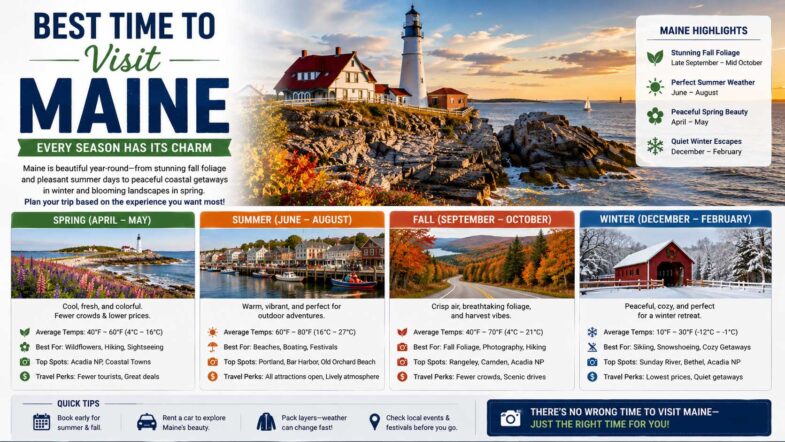
The best time to visit Maine is generally from June through October, although the right month depends on what you want from your trip. Summer brings warm weather, coastal activities, and long sightseeing days, while September and early October offer cooler temperatures and famous fall colors. Meanwhile, late spring can be a good choice for travelers who prefer fewer crowds and potentially lower accommodation prices.
Maine changes dramatically with the seasons. A July trip to Bar Harbor feels completely different from a January getaway in the western mountains. Therefore, instead of choosing dates based only on weather, consider your plans, budget, tolerance for crowds, and preferred activities.
When Is the Best Time to Visit Maine?
For most first-time travelers, June through September provides the easiest combination of comfortable weather, open attractions, outdoor activities, and accessible coastal destinations.
July and August are especially popular. Coastal towns are lively, restaurants and seasonal businesses are operating, and conditions are generally suitable for hiking, boating, beaches, and scenic drives. However, higher demand can also mean more visitors and higher accommodation prices.
September offers a particularly attractive balance. Summer crowds often begin to ease, while days can still be comfortable for exploring. As the month progresses, fall color starts appearing in parts of the state.
October is another standout period, especially for foliage trips. However, fall color timing varies by location and weather conditions each year.
Travelers who enjoy northern destinations may notice some similarities when researching the best time to visit Alaska, since both destinations require careful planning around short summers, seasonal businesses, outdoor conditions, and rapidly changing weather.
Maine Seasons at a Glance
Maine is a year-round destination, but each season suits a different traveler.
| Season | Typical travel experience | Best for | Crowd level |
|---|---|---|---|
| Spring: March–May | Cool, wet, gradually warming | Lower-key trips, value seekers | Low |
| Summer: June–August | Warmest weather, long days | Coast, hiking, families, boating | High |
| Fall: September–November | Cool weather, changing leaves | Foliage, road trips, photography | Medium to high |
| Winter: December–February | Cold and snowy inland | Skiing, snow activities, quiet escapes | Varies by area |
Weather varies considerably between the coast, interior, mountains, and northern Maine. Therefore, always check the forecast for the specific places on your itinerary.
Summer: Best Time of Year to Visit Maine for Coastal Trips
For many travelers, summer is the best time of year to visit Maine.
June usually starts the main warm-weather travel season. Temperatures become more comfortable, daylight is long, and many seasonal businesses are open. As a result, it is an appealing month for sightseeing without necessarily encountering the peak demand of late July and August.
July and August generally offer Maine’s warmest weather. Consequently, these months work well for exploring the coast, taking boat trips, hiking in Acadia National Park, visiting lighthouses, or spending time around lakes.
However, summer is popular for a reason, so reservations matter.
Bar Harbor and other well-known coastal communities can become busy. Likewise, popular accommodations may cost considerably more than during quieter periods.
If your schedule is fixed around school vacations, reserve lodging and rental cars well ahead of your trip.
Fall: The Season for Maine’s Famous Colors
Maine’s autumn scenery attracts travelers from around the country.
Fall foliage does not peak everywhere at once. Northern and higher-elevation areas generally change earlier, while southern and coastal locations tend to reach their strongest color later.
As a broad planning rule, late September through mid-October is worth considering for a foliage-focused trip. However, exact timing changes from year to year because temperature, rainfall, and other conditions influence leaf color.
Therefore, check Maine’s official foliage updates closer to your travel dates instead of relying entirely on historical averages.
If fall scenery is your priority, build some flexibility into the itinerary. A road trip makes it easier to adjust your route toward areas with better color.
Travelers comparing several mountain destinations may also find the best time to visit Colorado useful because elevation strongly influences seasonal conditions in both places, although the climates and landscapes are quite different.
Spring: Quieter Travel With a Few Trade-Offs
Spring can be appealing if avoiding peak crowds matters more than having perfect weather.
March still feels wintry in many parts of Maine. Meanwhile, April can bring cool temperatures, rain, mud, and unpredictable conditions.
May becomes more attractive as temperatures rise and destinations prepare for summer. Still, some seasonal restaurants, tours, and attractions may have limited hours early in the season.
Another consideration is insects. Black flies and mosquitoes can become noticeable in certain wooded and inland areas during late spring and early summer.
Despite these drawbacks, spring can work well for flexible travelers. Accommodation availability may be better, popular places feel less crowded, and the slower atmosphere can make towns more relaxing to explore.
Winter in Maine: Best for Snow Rather Than Coastal Sightseeing
Winter is not the ideal season for a classic first-time coastal vacation, but it can be excellent for travelers who actively want snow.
Western Maine has skiing and snowboarding, while other areas offer cross-country skiing, snowshoeing, snowmobiling, and winter scenery.
December can also provide festive small-town experiences. January and February, however, bring serious winter conditions, especially inland and farther north.
Road conditions can change quickly during storms. Therefore, winter travelers should monitor forecasts and allow flexibility when driving.
If you specifically want a cold-weather adventure, comparing the best month to visit Alaska can also provide useful perspective on planning trips where daylight, snowfall, road conditions, and seasonal activities matter heavily.
Best Time to Visit Bar Harbor Maine
The best time to visit Bar Harbor Maine is typically between June and October, depending on whether you prioritize summer activities or fall scenery.
July and August provide the classic summer experience. Restaurants, shops, boat excursions, and other seasonal businesses are generally active, while nearby Acadia National Park is at its busiest.
June can offer a good compromise if you want summer-style travel with somewhat less peak-season pressure.
September is another strong choice. Temperatures begin cooling, yet outdoor sightseeing can remain enjoyable. Meanwhile, the transition toward fall makes the landscape especially attractive.
October works well for foliage travelers, although some businesses may begin reducing hours as the season progresses.
If Acadia is central to your plans, check current park information for transportation, reservations, road conditions, and seasonal services before arriving.
Best Time to Visit Portland Maine
The best time to visit Portland Maine is generally from late spring through fall.
Summer offers warm conditions for walking around the Old Port, taking harbor cruises, visiting nearby lighthouses, and enjoying the city’s food scene. However, summer weekends can be busy.
September can be particularly pleasant because the weather is often comfortable while the heaviest summer vacation period begins to pass.
October adds fall atmosphere and cooler temperatures. Meanwhile, Portland remains more practical outside peak season than many smaller coastal communities because it is a year-round city.
Winter can also work for travelers primarily interested in restaurants, breweries, museums, and a quieter urban getaway. However, snow and cold weather can affect outdoor plans.
Cheapest Time to Visit Maine
If budget matters most, consider late fall, winter outside ski destinations and holiday periods, or parts of early spring.
Accommodation prices often respond to demand, so coastal properties may be much cheaper outside summer and peak foliage periods. However, the lowest rate does not always provide the best value if the attractions you want are closed.
A better strategy is to target a shoulder season.
Late May, June, September, and parts of October can sometimes provide a more favorable balance between weather, availability, and cost than peak summer.
Midweek stays may also cost less than popular weekends, depending on the destination.
Likewise, understanding when is the best time to buy plane tickets can help you plan airfare separately rather than assuming a particular weekday or last-minute booking will always produce the lowest price.
How Crowded Does Maine Get?
Crowds vary significantly by destination.
Acadia National Park, Bar Harbor, Ogunquit, Kennebunkport, Camden, and other popular coastal locations can become busy during summer. Fall foliage weekends can also generate heavy demand in scenic areas.
However, Maine is geographically large enough that you can find quieter alternatives.
For example, travelers who do not need to stay directly in Bar Harbor can investigate nearby communities. Likewise, exploring less famous stretches of coast or inland regions can create a more relaxed experience.
Starting early in the morning also helps at popular hiking trails and viewpoints.
When possible, visit major attractions on weekdays rather than weekends.
Maine Weather and What to Pack
Maine weather can change quickly, particularly near the coast and in the mountains.
During summer, pack lightweight clothing but bring a warmer layer for cool mornings, evenings, and boat trips. A light rain jacket is also useful.
For fall, layers become even more valuable. Morning temperatures can feel noticeably colder than afternoon conditions.
Spring visitors should prepare for rain, cool weather, and potentially muddy outdoor conditions.
Winter requires proper cold-weather clothing, including an insulated coat, gloves, warm footwear, and layers suitable for the activities you plan.
Regardless of season, comfortable walking shoes are worthwhile because many Maine trips involve trails, rocky coastlines, historic districts, or uneven paths.
Planning a Maine Road Trip
Driving is one of the most flexible ways to experience Maine.
A classic trip can combine Portland, the southern coast, Midcoast Maine, Bar Harbor, and Acadia National Park. However, avoid trying to cover the entire state in a few days.
Distances can be deceptive. Scenic coastal roads also take longer than highway routes, especially when you stop at lighthouses, harbors, beaches, and small towns.
For a one-week trip, consider focusing on two or three regions rather than constantly changing hotels.
For example, you could spend a few nights around Portland and the southern coast, continue toward Camden or Rockland, and then finish around Bar Harbor and Acadia.
That pace leaves enough time to enjoy the destination rather than treating every day as a long drive.
Things to Do by Season
Summer offers the broadest activity selection. You can hike, kayak, sail, visit beaches, explore islands, tour lighthouses, and spend long days outdoors.
Fall shifts the focus toward scenic drives, hiking, photography, harvest-season experiences, and foliage viewing.
Winter is better suited to skiing, snowshoeing, snowmobiling, and cozy indoor escapes.
Spring works well for travelers who prefer quieter towns, although weather can limit outdoor plans.
If waterfalls and spring scenery are a major priority on a broader Northeast trip, researching the best time to visit Niagara Falls can help when building a multi-destination itinerary, although Maine and Niagara have very different travel experiences.
Maine Food Worth Planning Around
Food is part of the Maine travel experience, especially along the coast.
Lobster is the obvious favorite, whether you choose a traditional lobster shack, lobster roll, or full seafood dinner. However, Maine is also known for blueberries, whoopie pies, clams, oysters, and a growing collection of local breweries and restaurants.
Seasonal opening hours matter, particularly in smaller coastal communities.
Therefore, if a specific restaurant is high on your list, check its current schedule shortly before visiting.
Reservations can also be helpful for popular restaurants during summer and fall weekends.
Mistakes to Avoid When Choosing Your Travel Dates
One common mistake is assuming all of Maine experiences the same weather. Northern Maine, mountain regions, Portland, and the Down East coast can have noticeably different conditions.
Another is expecting exact fall foliage dates months in advance. Historical timing is useful for planning, but nature does not follow a fixed calendar.
Likewise, do not assume every coastal business operates year-round. Smaller seasonal businesses may close or reduce hours outside the main tourism season.
Finally, avoid overpacking your itinerary. Maine rewards slower travel, especially when exploring the coast.
Leave room for spontaneous lighthouse stops, harbor walks, scenic viewpoints, and local meals.
FAQs About the Best Time to Visit Maine
What is the best month to visit Maine?
September is one of the strongest all-around choices because it combines late-summer conditions in many areas with fewer peak vacation crowds and the beginning of fall color. However, July and August are better if warm-weather activities are your priority.
When is the best time to visit Maine for fall colors?
Late September through mid-October is generally a useful window, although peak foliage varies by region and year. Northern Maine tends to change earlier than southern and coastal areas.
What is the warmest time to visit Maine?
July and August generally provide the warmest conditions and are popular for beaches, boating, hiking, and coastal trips.
What is the least crowded time to visit Maine?
Parts of spring, late fall, and winter tend to be quieter. However, ski areas can be busy in winter, while foliage destinations can remain popular during fall.
How many days do you need in Maine?
A long weekend can work for Portland or Bar Harbor alone. However, seven to ten days provides much more flexibility for combining the coast, small towns, and Acadia National Park.
Is October a good time to visit Maine?
Yes, especially for fall scenery. However, temperatures become cooler, and some seasonal businesses may reduce their hours or close later in the month.
Picking the Right Maine Season for Your Trip
For most travelers, the best time to visit Maine falls between June and October. Choose July or August if warm weather, coastal activities, and a lively summer atmosphere matter most. Meanwhile, September offers an appealing mix of comfortable sightseeing and lighter crowds, while late September into October attracts travelers looking for fall foliage.
Budget-conscious visitors can consider late spring or other shoulder-season dates, provided they check seasonal opening hours first.
Once you know whether your priority is Acadia hiking, Bar Harbor, Portland, beaches, foliage, snow, or simply fewer crowds, choosing your travel dates becomes much easier. Maine offers a very different experience in every season, so the best trip starts with matching the calendar to the experience you actually want.