
Best Time to Visit Niagara Falls: Weather, Crowds, Costs, and Seasonal Guide
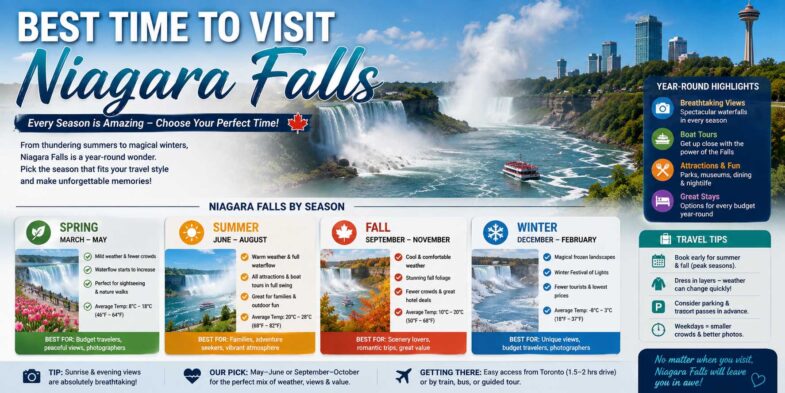
Seeing millions of gallons of water rush over Niagara Falls is impressive in every season, but your experience can change dramatically depending on when you go. For most travelers, the best time to visit Niagara Falls is from late May through September, when warmer weather, longer daylight hours, and a full range of attractions make sightseeing easy. However, spring and fall can be better if you prefer smaller crowds and potentially lower accommodation prices, while winter offers a completely different frozen landscape.
Niagara Falls sits on the border between Ontario, Canada, and New York, United States. Therefore, your ideal travel dates also depend on which side you plan to explore, the activities you want to do, and how comfortable you are with changing weather.
When Is the Best Time to Visit Niagara Falls?
June through September is generally the easiest period for a first visit.
Summer brings warm temperatures and long days, while major attractions usually operate on their fullest seasonal schedules. Boat tours, observation areas, walking routes, outdoor dining, and evening activities are easier to enjoy when the weather cooperates.
However, summer is also the busiest period. Hotel rates can rise, popular viewpoints become crowded, and attractions may have longer waits.
For that reason, late May, early June, September, and early October can offer an appealing compromise.
You may get comfortable sightseeing weather without the heaviest peak-season crowds.
Travelers planning a broader Canadian trip can also compare the best time to visit banff, since combining destinations requires accounting for very different mountain and Niagara weather patterns.
Niagara Falls Seasons at a Glance
Each season creates a noticeably different trip.
| Season | Weather | Crowds | Prices | Best For |
|---|---|---|---|---|
| Spring | Cool to mild | Low to moderate | Often moderate | Sightseeing, fewer crowds |
| Summer | Warm | Highest | Generally highest | First visits, full attraction choice |
| Fall | Mild to cool | Moderate to low | Often lower after peak | Fall colors, couples, photography |
| Winter | Cold, snowy | Lowest | Often lower | Frozen scenery, quiet trips |
Exact weather, attraction schedules, and hotel rates vary from year to year. Therefore, check current operating calendars before finalizing your trip.
Best Time to Visit Niagara Falls Canada
The best time to visit Niagara Falls Canada depends heavily on what you expect from the destination.
If you want the classic experience—Horseshoe Falls viewpoints, boat rides, outdoor attractions, restaurants, and nighttime entertainment—summer provides the widest selection.
The Canadian side also has many hotels within walking distance of the falls. Therefore, staying nearby can reduce the need to drive once you arrive.
September can be particularly appealing. Summer vacation crowds begin to decline, yet temperatures can still be pleasant enough for extended outdoor sightseeing.
Meanwhile, October attracts visitors interested in autumn colors. However, temperatures become less predictable as the month progresses.
Winter works best for travelers who care more about scenery and atmosphere than completing every seasonal attraction.
Spring: Fewer Crowds and Changing Weather
March through May marks the transition out of winter.
March can still feel very cold, and snow or ice may remain possible. Therefore, early spring isn’t the safest choice if you’re expecting mild outdoor sightseeing.
April gradually becomes more comfortable, although rain, chilly mornings, and rapidly changing conditions remain common.
By May, the destination becomes much more attractive for general sightseeing. Temperatures rise, greenery returns, and more seasonal attractions begin operating.
Late May can be a particularly useful window because you may arrive before the biggest summer vacation crowds.
However, attraction schedules don’t switch to full summer operations on one universal date. Always check the specific activities you want before booking.
Summer: Best for the Full Niagara Experience
Summer is the best time of year to visit Niagara Falls for travelers who want the broadest choice of activities.
June, July, and August bring warmer weather and longer daylight hours. As a result, you can fit more sightseeing into each day.
Boat experiences are a major attraction during this period. Likewise, observation areas, walking routes, family attractions, and outdoor dining become easy to combine into a full itinerary.
July and August are typically the busiest months, though.
Therefore, reserve accommodation early if you’re visiting on a weekend or during a holiday period.
Early mornings can make a major difference. If you stay close to the falls, visit the most popular viewpoints before day-trippers arrive.
Summer travelers who enjoy planning nature-heavy trips may notice a similar peak-season tradeoff when researching the best time to visit glacier national park: the most accessible weather can also attract the largest crowds.
Fall: Great for Colors and a Slower Trip
September and October are strong alternatives to summer.
September often retains comfortable temperatures, while families return to school and peak vacation demand begins easing.
Therefore, travelers who don’t need to follow a school calendar may find September especially appealing.
October brings another advantage: fall foliage.
The parks and surrounding Niagara region can display attractive autumn colors, creating a different setting from summer’s bright green scenery.
However, conditions become cooler as fall progresses. Pack layers and expect evenings to feel considerably colder than afternoons.
Some seasonal activities also reduce schedules later in the season. Therefore, check operating dates if a particular boat ride or attraction is essential to your trip.
Winter: Is Niagara Falls Worth Visiting?
Yes, but winter Niagara Falls is a different vacation.
Temperatures can fall below freezing, while snow, ice, and wind can make outdoor sightseeing uncomfortable without proper clothing.
Still, the scenery can be remarkable.
Mist freezes on surrounding surfaces, snow covers parts of the landscape, and ice formations create dramatic winter views. The falls themselves continue flowing, although ice can change their appearance.
Consequently, winter can suit photographers, couples, repeat visitors, and travelers who prefer quieter destinations.
However, don’t build a winter itinerary around the same activities you would choose in July. Some attractions may operate on reduced schedules or close seasonally.
Travelers who enjoy dramatic cold-weather destinations can also compare this experience with the best time to visit alaska, where season choice similarly changes what you can realistically see and do.
Cheapest Time to Visit Niagara Falls
Winter generally offers some of the strongest opportunities for lower accommodation prices because demand drops substantially outside holiday periods and special events.
Late fall and early spring can also provide better value than peak summer.
However, hotel pricing depends on several factors, including:
- Weekday versus weekend
- Canadian or U.S. side
- Distance from the falls
- Falls-view versus standard room
- Holidays
- Local events
- Parking charges
- Hotel fees
Therefore, compare the complete cost rather than simply choosing the lowest advertised room rate.
A slightly more expensive hotel within walking distance may save parking fees and transportation costs.
Likewise, traveling Sunday through Thursday can sometimes be cheaper than staying over a popular summer weekend.
How Many Days Do You Need at Niagara Falls?
Two days works well for many first-time visitors.
On day one, focus on the falls themselves. Explore the major viewpoints, take a boat excursion if operating, and experience the falls from different perspectives.
Then, stay into the evening so you don’t have to rush back to your hotel.
On day two, add attractions beyond the primary viewpoints. Depending on your interests and which side you’re visiting, you could explore the Niagara Parkway, Niagara-on-the-Lake, local parks, family attractions, or additional nature experiences.
Three days gives you a more relaxed schedule.
It also creates flexibility if poor weather affects one part of your trip.
Niagara Falls Canada or U.S. Side?
Both sides provide worthwhile experiences, but they offer different perspectives.
The Canadian side is popular for broad panoramic views, particularly of Horseshoe Falls. It also has a concentrated tourism area with many hotels, restaurants, and attractions.
The U.S. side lets visitors get close to the falls through park areas and observation points.
If you have enough time and the correct travel documents, seeing both sides can provide the most complete experience.
However, remember that crossing the international border involves immigration requirements. Check current entry rules for your citizenship and circumstances before traveling.
For travelers considering adding another Canadian city to the itinerary, researching is montreal worth visiting can help when deciding whether Niagara should be part of a longer eastern Canada trip.
Best Things to Do at Niagara Falls
Simply watching the falls is free from several public viewpoints, but paid experiences can bring you much closer.
Boat tours are among the most memorable options because they travel toward the powerful mist near the falls. Expect to get wet even when protective ponchos are provided.
Other popular experiences may include observation towers, tunnels or viewpoints near the falls, scenic walks, zipline experiences, and nighttime viewing.
Families can also find entertainment beyond the natural attraction, particularly on the Canadian side.
Meanwhile, travelers with a car can explore the surrounding Niagara region.
Niagara-on-the-Lake, for example, offers a slower atmosphere that contrasts with the busy tourism zone near the falls.
Niagara Falls With Kids
Late spring through early fall is usually easiest for families.
Warmer weather reduces the amount of heavy clothing children need, while longer days provide more flexibility.
Still, summer crowds can make moving around popular viewpoints slower.
Therefore, start early and build breaks into the day.
Young children may also find the sound, mist, and crowds around certain viewpoints intense. Keep everyone together and follow barriers and posted safety instructions.
A hotel within walking distance can be worth paying more for when traveling with children because returning to the room for a break becomes much easier.
Niagara Falls for Couples
Late September through October can be an attractive period for couples.
The summer rush begins fading, while autumn colors add visual appeal to the surrounding landscape.
Couples can combine the falls with a meal overlooking the water, a scenic drive, or time in Niagara-on-the-Lake.
Winter also creates a quieter atmosphere, particularly on weekdays.
However, prioritize comfort. A romantic winter viewpoint quickly becomes less enjoyable if you aren’t dressed for freezing mist and strong winds.
What to Pack for Niagara Falls
Pack according to the season, but prepare for mist even on a clear day.
During summer, comfortable walking shoes, light clothing, sun protection, and a lightweight waterproof layer are useful.
In spring and fall, layers work best because morning and afternoon temperatures can feel very different.
Winter requires a warm coat, gloves, a hat, and footwear suitable for cold or potentially slippery conditions.
Also, protect electronics near heavy mist.
A waterproof phone case or secure bag can be useful during close-up experiences.
Travelers who enjoy outdoor destinations may recognize the same principle when researching the best time to visit zion national park: comfortable footwear and weather-appropriate clothing can influence the experience almost as much as choosing the right season.
How to Avoid the Biggest Crowds
Timing your sightseeing within the day can matter almost as much as choosing the right month.
During summer, arrive at major viewpoints early in the morning.
Crowds often increase later as tour groups and day visitors arrive.
Weekdays are generally preferable to weekends when your schedule allows.
Likewise, avoid major holiday weekends if smaller crowds are a priority.
Staying overnight gives you another advantage. Many day-trippers leave later in the afternoon or evening, so overnight visitors can enjoy the area during quieter hours.
Common Niagara Falls Planning Mistakes
One common mistake is assuming every attraction operates year-round.
While the waterfalls are always there, individual experiences can have seasonal schedules. Therefore, check official operating information before building your itinerary.
Another mistake is booking a distant hotel because the nightly price looks cheaper.
Parking and transportation expenses may erase the savings.
Comfortable shoes matter, particularly if you plan to explore several viewpoints.
Finally, don’t schedule every major activity back-to-back. Weather, queues, border crossings, and heavy crowds can create delays.
A flexible itinerary makes Niagara much more enjoyable.
FAQs About the Best Time to Visit Niagara Falls
What month is best for Niagara Falls?
June and September are excellent choices for many travelers because they can offer warm or mild weather without necessarily reaching the heaviest July and August crowds.
When is the best time to visit Niagara Falls for good weather?
Late spring through early fall generally provides the most comfortable conditions for outdoor sightseeing. July and August are warmest but also busiest.
Is October a good time for Niagara Falls?
Yes. October can provide beautiful autumn scenery and fewer crowds. However, temperatures become cooler and some seasonal attractions may reduce their operating schedules.
Is Niagara Falls open in winter?
The waterfalls can be viewed year-round. However, some attractions and services may have seasonal or reduced schedules.
What is the cheapest month to visit Niagara Falls?
There isn’t one guaranteed cheapest month because prices change constantly. Still, winter outside holidays and special events often has lower accommodation demand than summer.
Is Niagara Falls better in summer or fall?
Summer is better if you want warm weather and the widest range of activities. Fall can be better if you prefer fewer crowds, cooler conditions, and autumn colors.
Should I stay on the Canadian or American side?
The Canadian side is popular for panoramic views and its concentrated tourism area, while the U.S. side provides its own close-up viewpoints and park experiences. If border requirements allow, visiting both gives you different perspectives.
How long should a first trip be?
Two nights can work well for a first visit, while three nights allow a more relaxed schedule and extra time for the surrounding Niagara region.
Pick the Season That Matches Your Trip
For a first visit with warm weather and the widest choice of attractions, the best time to visit Niagara Falls is generally late May through September. June and September stand out because they can offer a useful balance between comfortable conditions and peak-season crowds.
However, don’t dismiss the rest of the year. October can be beautiful for fall colors, while winter offers dramatic icy scenery and a much quieter atmosphere. Spring, meanwhile, can provide lower crowds as the destination gradually returns to its warmer-season rhythm.
Choose your dates around the experience you want rather than weather alone. Then, check attraction schedules, compare weekday hotel rates, pack for mist and changing temperatures, and leave enough flexibility to enjoy the falls without rushing.