
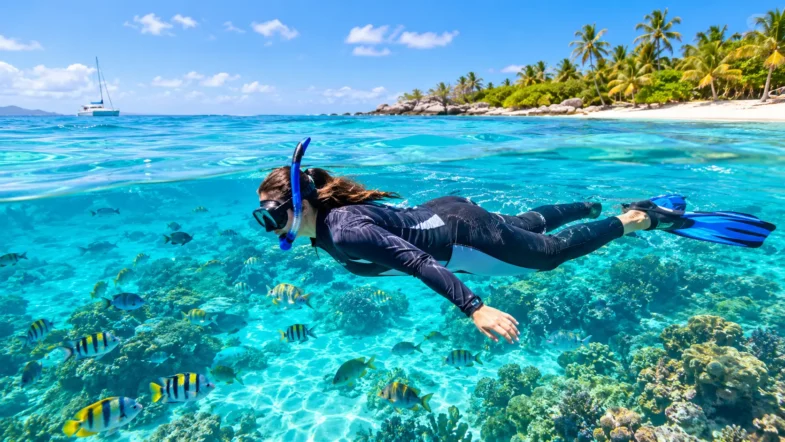
Best Snorkeling in Caribbean Waters: 10 Spots Worth Planning a Trip Around
If you want the short answer, Bonaire, Belize and the British Virgin Islands usually top most snorkelers’ lists. Still, the best snorkeling in Caribbean waters depends on what you want, whether that is easy beach entries, sea turtles, shipwrecks or wild reefs far from the crowds. So, this guide covers the top spots, the best months to go and the practical tips that make a snorkel trip go smoothly.
Also, each spot below notes whether you can swim straight from the beach or need a boat. That way, you can match your trip to your comfort level and budget.
Where to Find the Best Snorkeling in Caribbean Islands
The Caribbean is huge, so reef quality, water clarity and access vary a lot from island to island. Here are ten places that stand out for good reasons.
1. Bonaire: The Best Caribbean Snorkeling From Shore
Bonaire is often called a shore diver’s dream, and snorkelers love it too. In fact, the whole coastline is protected as part of the Bonaire National Marine Park, so the reefs start just a few steps from the shore. Plus, yellow painted stones along the coastal road mark many entry points, which makes finding a site very easy.
Before you swim, however, you will need to pay the island’s nature fee. Then, simply rent a car, grab your mask and hop from site to site. Because the reefs are so close, Bonaire also ranks high on many lists of the best places for scuba diving, so mixed groups of divers and snorkelers both stay happy here.
2. Curaçao
Just next door, Curaçao offers calm western beaches with rocky reefs nearby. For example, Playa Piskado is known for sea turtles that often swim close to the fishing boats. Meanwhile, the Tugboat wreck near Caracasbaai sits in shallow water, so even beginners can see it clearly from the surface.
3. Belize
Belize sits beside one of the largest barrier reefs in the world. So, if you want variety, this is a top pick. Most snorkelers head out from Ambergris Caye or Caye Caulker to Hol Chan Marine Reserve and Shark Ray Alley, where nurse sharks and rays often glide right past.
Since these sites are offshore, you will need a boat tour. Also, many first-time visitors wonder is belize safe for travelers, and checking current advice before you book is always a smart step.
4. British Virgin Islands
The BVI work beautifully for island hopping by boat. For instance, The Caves at Norman Island and The Indians, a group of rocky pinnacles nearby, are both popular stops on day sails. Then, at The Baths on Virgin Gorda, you can swim among giant granite boulders before snorkeling the clear water just offshore.
5. US Virgin Islands
St. John is a great choice if you prefer to stay on US soil. Trunk Bay has an underwater snorkel trail with signs on the seafloor, so it is especially good for kids and beginners. Meanwhile, Waterlemon Cay offers a longer shore swim with plenty of fish and the chance to spot turtles.
6. Cozumel, Mexico
Cozumel is famous among divers, but snorkelers have plenty to see too. For example, Dzul-Ha and Chankanaab give you easy access to colorful shallow reefs. Also, the currents here can be strong, so take a guided tour if you want to reach the deeper outer reefs.
7. Grand Cayman
Grand Cayman offers both shore and boat options. On one hand, Cemetery Beach and Eden Rock are popular spots you can reach on foot. On the other hand, Stingray City, a shallow sandbar where you stand among southern stingrays, requires a short boat ride.
8. Aruba
Aruba is better known for its beaches, yet it still has solid snorkeling. For instance, Boca Catalina and Mangel Halto are easy shore entries with calm water. Then, for something bigger, boat tours visit the Antilla shipwreck, one of the largest wrecks in the region.
Also, since Aruba sits south of the main hurricane path, conditions are often calm for much of the year. So, if you are planning around weather, our guide to the best time to visit aruba breaks down the seasons in detail.
9. Turks and Caicos
Providenciales has some of the clearest water in the region. In particular, Smith’s Reef and Bight Reef (often called Coral Gardens) sit right off Grace Bay’s long beach. As a result, you can enjoy a full snorkel morning without booking a single tour.
10. Roatán, Honduras
Roatán is a budget-friendly option that still delivers healthy reefs. For example, West Bay offers easy entry from the sand and colorful coral within a short swim. Plus, the island has plenty of affordable guesthouses and tour operators.
Best Beach Snorkeling in Caribbean Destinations
Not everyone wants to spend money on boat tours every day. Luckily, the best snorkeling in Caribbean from shore is easy to find if you choose the right island. Generally, Bonaire, Curaçao, Turks and Caicos and St. John give you the most reef within a short swim.
Here is a quick list of standout spots for snorkeling straight from the beach:
- Bonaire: Almost any marked site along the west coast, since the reef starts just offshore.
- Curaçao: Playa Piskado and Playa Lagun, both of which have calm water and frequent turtle sightings.
- Turks and Caicos: Smith’s Reef and Bight Reef, which sit right off popular beaches.
- St. John: Trunk Bay and Waterlemon Cay, where entry is easy and fish are plentiful.
- Grand Cayman: Cemetery Beach, because it offers a gentle entry and a nearby reef.
That said, shore snorkeling still needs care. So, always check the currents, swim with a buddy and watch for boat traffic before you enter the water.
When to Go for the Best Snorkeling in Caribbean Seas
Generally, the dry season from December to April brings calmer seas and clearer water. As a result, it is also the busiest and priciest time to visit. On the other hand, May and early June often offer warm water, fewer crowds and lower hotel rates.
However, hurricane season runs from June 1 to November 30, with the peak usually in August through October. So, if you travel then, check forecasts from the National Hurricane Center and consider travel insurance. Meanwhile, the ABC islands of Aruba, Bonaire and Curaçao lie farther south, so they tend to see fewer storms.
Water temperatures usually stay warm year-round, often in the high 70s to mid 80s °F. Even so, a thin rash guard helps on longer swims, especially in winter.
Choosing the Best Caribbean Snorkeling Spot for Your Group
For Beginners and Families
If you are new to snorkeling or traveling with kids, start with calm, shallow bays. For instance, Trunk Bay, Smith’s Reef and Mangel Halto all have gentle entries. Also, consider a guided tour on your first day so you can practice with an expert nearby.
For Confident Swimmers
Stronger swimmers can enjoy the longer reef swims in Bonaire and the offshore sites in Belize and Cozumel. Similarly, the BVI sailing trips let you hit several spots in one day.
For Travelers Comparing Regions
If you are weighing the Caribbean against other tropical spots, it helps to see how they compare. For example, our guide to the best places to snorkel in hawaii covers a very different style of reef, with more volcanic coastlines and cooler water.
What to Pack for the Best Caribbean Snorkeling Trip
Good gear makes a huge difference, so bring a few essentials from home. First, pack a mask that fits your face well, since rental masks often leak. Next, add a snorkel with a dry top and lightweight fins if you plan to snorkel often.
Then, bring a rash guard, water shoes for rocky entries and a waterproof phone pouch. Also, choose a mineral sunscreen, because some sunscreen chemicals may harm coral reefs, and a few places even restrict them. For a full rundown of everything else, our packing list for beach vacation covers clothing, toiletries and travel documents.
Staying Safe While Snorkeling the Best Caribbean Reefs
Snorkeling is relaxing, but a little caution goes a long way. So, keep these simple rules in mind:
- Always snorkel with a buddy, even at calm beaches.
- Check local conditions first, because currents can change quickly.
- Never stand on or touch coral, since it is alive and fragile.
- Keep a respectful distance from turtles, rays and other wildlife.
- Wear a bright swim cap or use a float so boats can see you.
- Finally, stay hydrated and limit time in the midday sun.
Common Mistakes to Avoid
- Booking a boat tour on a windy day, when visibility often drops.
- Using a cheap mask that fogs or leaks, which then ruins the experience.
- Swimming too far out alone, especially at unfamiliar beaches.
- Skipping local marine park fees, which help protect the reefs.
- Forgetting sun protection on your back, since it faces the sun the whole time.
Frequently Asked Questions
Which island has the best snorkeling in the Caribbean?
Many travelers rank Bonaire first because of its protected reefs and easy shore access. Still, Belize and the BVI are close contenders, especially for boat-based trips.
Can you find the best snorkeling in the Caribbean without a tour?
Yes, of course. In fact, Bonaire, Curaçao, Turks and Caicos and St. John all have great reefs you can reach right from the sand.
Is snorkeling good for non-swimmers?
Generally, you should be comfortable in the water. However, many tours offer life vests and flotation belts, so weaker swimmers can still join in shallow, calm areas.
Which budget island still has the best Caribbean snorkeling?
Prices vary by season and booking time. Even so, Roatán and parts of Mexico often cost less than islands like Turks and Caicos or the BVI.
Plan Your Trip for the Best Snorkeling in the Caribbean
To sum up, start by deciding whether you want shore snorkeling or boat trips, because that choice narrows your options fast. Then, pick your travel month based on weather and budget, and pack your own mask for a better fit.
Once you have that sorted, you can enjoy some of the best snorkeling in Caribbean waters at your own pace. Above all, go slow, stay safe and leave the reefs just as beautiful as you found them.