
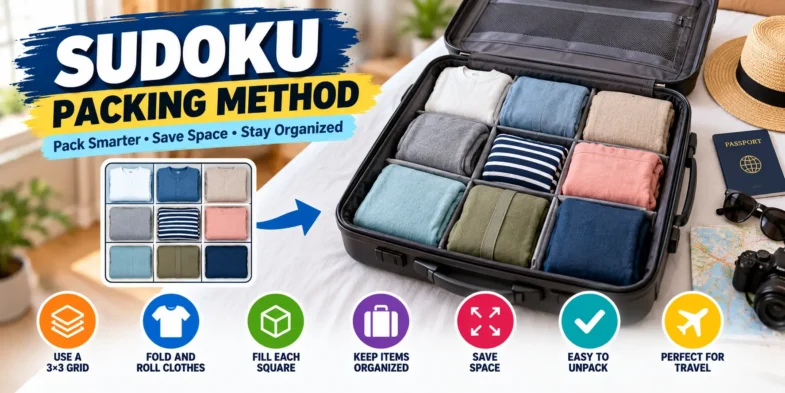
Sudoku Packing Method: How to Pack More Outfits With Less Clothing
Packing for a vacation often starts with good intentions. However, before you know it, your suitcase is full of clothes you might never wear. That’s where the sudoku packing method can make a real difference.
Instead of packing random outfits, this clever travel wardrobe technique helps you organize a small collection of clothing into a grid. By choosing pieces that work together, you can create several outfit combinations without bringing your entire wardrobe.
The method is especially useful for weekend getaways, international vacations, city breaks, and carry-on-only travel.
Whether you’re preparing for a summer holiday or a longer European adventure, this guide explains how Sudoku packing works, how to build your own clothing grid, and how to adapt the method to different destinations.
What Is the Sudoku Packing Method?
The sudoku packing method is a minimalist clothing organization technique inspired by the familiar nine-square Sudoku puzzle.
Instead of solving numbers, you arrange clothing items in a 3×3 grid.
A common approach uses nine pieces of clothing divided into three categories:
- Three tops
- Three bottoms
- Three layering pieces
However, some travelers use dresses, additional tops, or other categories depending on their personal style.
The goal is to create a versatile capsule wardrobe in which several items coordinate with one another.
For example, a white T-shirt might work with jeans, shorts, and a skirt. Meanwhile, a lightweight cardigan could complement several combinations.
As a result, you can enjoy more outfit variety while packing fewer individual pieces.
Unlike traditional outfit-by-outfit packing, Sudoku packing encourages you to think about clothing compatibility before placing anything in your suitcase.
How to Use the Sudoku Packing Method Step by Step
Creating your first packing grid is straightforward. However, choosing versatile clothing makes the biggest difference.
Step 1: Choose Nine Clothing Pieces
Start by selecting nine items suitable for your destination.
For example, a basic travel wardrobe might include:
| Category | Item 1 | Item 2 | Item 3 |
|---|---|---|---|
| Tops | White T-shirt | Black tank top | Lightweight blouse |
| Bottoms | Blue jeans | Beige shorts | Black trousers |
| Layers | Denim jacket | Neutral cardigan | Linen overshirt |
This example provides a starting point rather than a strict formula.
Depending on your travel plans, you may prefer different clothing categories.
Step 2: Create a 3×3 Clothing Grid
Next, arrange your selected items in three rows and three columns.
You can place the clothes on your bed, organize photographs on your phone, or create a simple digital collage.
Then, examine how the pieces work together.
For instance, your black trousers should ideally match more than one top.
Likewise, your cardigan should complement several outfits rather than just one.
Step 3: Test Your Outfit Combinations
Now, experiment with different clothing combinations.
Try pairing each top with multiple bottoms and layers.
Although nine items can create many possible combinations, not every combination will look good or suit the weather.
Therefore, focus on realistic outfits you would actually wear.
Step 4: Pack the Clothing Efficiently
Once your wardrobe is finalized, organize everything inside your suitcase.
For example, rolling lightweight clothing can make individual pieces easier to identify.
If you prefer compartmentalized luggage, learning how to use packing cubes can help you separate tops, bottoms, and accessories.
However, remember that packing cubes improve organization rather than automatically reducing luggage weight.
Sudoku Packing Method Summer: A Lightweight Vacation Wardrobe
Summer travel is particularly well suited to Sudoku packing because lightweight clothing is easy to mix and match.
However, hot weather, humidity, and outdoor activities may require additional considerations.
Example Summer Packing Grid
For a warm-weather vacation, consider these nine pieces:
- White linen shirt
- Cotton T-shirt
- Sleeveless top
- Lightweight shorts
- Breathable trousers
- Casual skirt
- Light cardigan
- Linen overshirt
- Thin evening layer
Together, these pieces can support sightseeing, casual dining, and relaxed evening activities.
Meanwhile, choose fabrics that dry reasonably quickly and feel comfortable in warm conditions.
Packing for Beach Destinations
Beach vacations usually require extra items beyond the standard clothing grid.
For example, swimwear, sandals, a sun hat, and suitable sun protection may be necessary.
Therefore, use your Sudoku wardrobe for everyday outfits while keeping beach-specific essentials separate.
A detailed packing list for beach vacation can help you remember items that the clothing grid does not cover.
For tropical destinations, consider breathable fabrics and footwear suitable for both sandy areas and walking tours.
Sudoku Packing Method Men: A Simple Travel Wardrobe
The sudoku packing method men use follows the same basic principle: select versatile clothing that works across multiple outfits.
However, the clothing categories may look slightly different.
Example Men’s 3×3 Packing Grid
| Tops | Bottoms | Layers |
|---|---|---|
| White T-shirt | Dark jeans | Lightweight jacket |
| Polo shirt | Chino shorts | Casual overshirt |
| Button-down shirt | Neutral chinos | Thin sweater |
This selection works well for casual city trips, weekend breaks, and moderate-weather destinations.
For example, a polo shirt with chinos creates a smart-casual outfit.
Meanwhile, the same chinos can work with a T-shirt and lightweight jacket for sightseeing.
Choosing a Coordinated Color Palette
Neutral colors make outfit planning easier.
Consider combining navy, black, beige, gray, and white.
Then, add one or two accent colors if you prefer a more personal style.
However, avoid choosing every item in the same shade simply to make matching easier.
Instead, select clothing that reflects your preferences and suits your activities.
Sudoku Packing Method 4×4: A Larger Travel Wardrobe
The sudoku packing method 4×4 is an expanded variation that uses a sixteen-square clothing grid.
Unlike the standard nine-piece approach, a 4×4 layout allows additional clothing options.
However, there is no single universal rule for arranging these sixteen items.
You can customize the categories according to your trip.
Example 4×4 Travel Wardrobe
| Tops | Bottoms | Layers | Extra Pieces |
|---|---|---|---|
| White T-shirt | Jeans | Cardigan | Casual dress |
| Black top | Shorts | Denim jacket | Activewear top |
| Button-down shirt | Trousers | Lightweight sweater | Extra shorts |
| Casual blouse | Skirt | Rain jacket | Evening top |
This variation can work well for longer vacations or trips involving several climates.
However, sixteen items are not always necessary.
If you have access to laundry facilities, a smaller wardrobe may still be sufficient.
Adapting Sudoku Packing to Different Destinations
Your destination should influence which clothing pieces you select.
Although the grid provides structure, weather and planned activities determine what belongs inside it.
European City Breaks
European travel often involves walking, public transportation, and changing weather.
Therefore, comfortable shoes, practical layers, and versatile outfits are useful.
For example, a europe packing list can help you identify destination-specific essentials before choosing your Sudoku wardrobe.
If you’re visiting several cities, consider clothing that works for sightseeing, restaurants, and train journeys.
Winter Vacations
Cold-weather travel requires more substantial clothing.
Instead of using three lightweight layers, you may need thermal garments, insulated outerwear, and weather-resistant accessories.
However, bulky winter equipment does not need to fit neatly into the nine-square system.
Treat essential cold-weather gear as separate from your everyday outfit grid.
Family Holidays
Packing for a family requires additional organization because each traveler has different clothing needs.
For example, adults may benefit from a minimalist capsule wardrobe, while young children often need more backup outfits.
Practical family travel tips can help parents balance luggage space, children’s essentials, and transportation needs.
Meanwhile, keep frequently used supplies accessible rather than packing everything into one large suitcase.
Sudoku Packing vs. Traditional Packing
Before choosing your travel wardrobe, check your airline’s luggage restrictions. According to the Federal Aviation Administration (FAA), travelers should also review which items are permitted in carry-on and checked baggage. Therefore, packing light is helpful, but following airline baggage rules and safety requirements is equally necessary.
Both approaches have advantages, depending on your travel style.
| Feature | Sudoku Packing | Traditional Packing |
|---|---|---|
| Clothing selection | Coordinated wardrobe | Individual outfits |
| Outfit flexibility | Multiple combinations | Depends on chosen pieces |
| Packing time | More planning beforehand | Often quicker initially |
| Luggage space | Can reduce unnecessary clothing | May encourage overpacking |
| Best suited for | Carry-on travel and capsule wardrobes | Specialized or varied activities |
Sudoku packing works particularly well when your activities require similar clothing.
However, traditional packing may be more practical for trips involving formal events, specialized outdoor equipment, or very different climates.
Common Mistakes to Avoid With Sudoku Packing
Although the method is simple, a few mistakes can reduce its usefulness.
Choosing Clothes That Don’t Match
First, avoid selecting nine attractive pieces without checking whether they coordinate.
Instead, test several outfit combinations before packing.
If an item only works with one other piece, consider replacing it with something more versatile.
Ignoring Destination Weather
Next, check the forecast and typical seasonal conditions.
For example, a lightweight summer wardrobe may not provide enough protection during cold evenings or heavy rainfall.
Therefore, prioritize weather suitability over maintaining a perfect grid.
Forgetting Shoes and Accessories
The standard Sudoku clothing grid does not usually include every travel essential.
Consequently, remember to pack suitable shoes, underwear, socks, sleepwear, and personal accessories.
You may also need swimwear, workout clothing, or specialized equipment.
Packing Too Few Practical Essentials
Minimalist packing should not mean sacrificing comfort.
For example, a weeklong trip without laundry access may require additional underwear or frequently changed clothing.
Therefore, adjust your wardrobe to your actual routine rather than following a fixed number.
Practical Tips for Making Sudoku Packing Easier
A few simple habits can improve your results.
First, choose your clothing according to your planned activities rather than packing everything you might possibly wear.
Next, photograph your completed outfit combinations. That way, you can quickly decide what to wear during your trip.
Also, consider wearing your bulkiest comfortable clothing during travel to free up suitcase space.
However, always follow airline baggage restrictions and avoid carrying unnecessary weight.
Finally, leave some space for souvenirs or purchases you may make during your vacation.
Frequently Asked Questions About Sudoku Packing
How Does the Sudoku Packing Method Work?
The method involves selecting a small collection of coordinated clothing, commonly nine pieces arranged in a 3×3 grid.
Then, travelers combine those items to create multiple outfits without packing separate clothing for every day.
Is Sudoku Packing Good for Long Trips?
Yes, it can work for longer vacations, especially when laundry facilities are available.
However, travelers visiting several climates may need additional layers or a larger wardrobe.
Can You Use Sudoku Packing for a Two-Week Vacation?
Yes. Start with versatile clothing, then plan laundry opportunities and adjust for your itinerary.
For example, a nine-piece wardrobe may work for a relaxed city holiday but may need expansion for specialized activities.
What Is the Difference Between 3×3 and 4×4 Sudoku Packing?
A 3×3 layout organizes nine clothing items, while a 4×4 variation uses sixteen.
The larger version offers more flexibility but takes up more luggage space.
Does Sudoku Packing Actually Save Space?
It can reduce unnecessary clothing by encouraging coordinated outfits.
However, the amount of space saved depends on garment thickness, packing technique, and the number of additional essentials.
Make Your Next Suitcase Easier to Pack
The sudoku packing method offers a practical way to simplify travel preparation without wearing the same outfit every day.
Instead of filling your suitcase with unrelated clothing, choose pieces that coordinate, suit your destination, and support your planned activities.
Start with a basic 3×3 grid, test your combinations, and expand the wardrobe only when necessary.
With thoughtful clothing choices and a little planning, you can travel with a lighter, more organized suitcase while still having plenty of outfits to enjoy your trip.