
Best Time to Visit Singapore: Weather, Seasons, Costs & Travel Tips
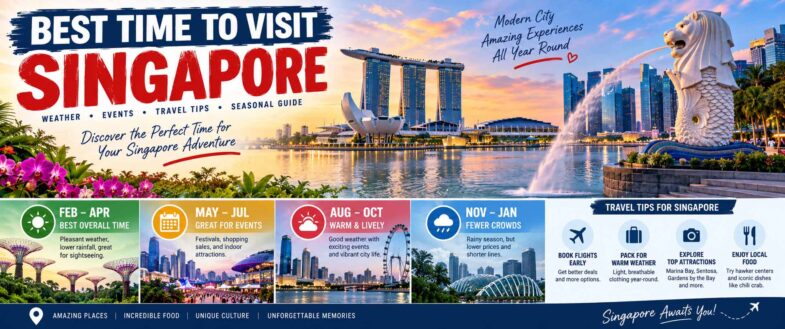
Singapore stays warm throughout the year, so choosing travel dates is less about avoiding winter and more about balancing rainfall, humidity, crowds, prices, and events. For most travelers, the best time to visit Singapore is generally from February to April, when conditions can be relatively favorable for sightseeing and outdoor activities. However, Singapore is genuinely a year-round destination, and the right month for you may depend more on your budget and travel plans than the weather alone.
Because Singapore has a tropical climate, you should expect heat, humidity, and occasional rain whenever you arrive. Fortunately, showers often fit easily around sightseeing, especially because the city has excellent indoor attractions, covered walkways, malls, museums, and public transportation.
When Is the Best Time to Visit Singapore?
February through April is often a comfortable period to consider because rainfall can be lower than during the wetter monsoon period, although showers are still possible.
If you want outdoor sightseeing, gardens, waterfront walks, and neighborhood exploration, these months can offer a good balance. However, major holidays and events may affect crowds and accommodation rates.
Budget travelers have different priorities. Instead of searching only for the driest weather, they may prefer periods when hotels or flights offer better value.
Here is a quick overview:
| Period | Typical Experience | Good For |
|---|---|---|
| February–April | Often relatively favorable weather | First-time visitors, sightseeing |
| May–September | Hot, humid, passing showers | Flexible travelers, indoor/outdoor trips |
| October–January | Wetter overall, especially late year | Shopping, food, indoor attractions |
| Major holidays/events | Higher demand possible | Festivals and special experiences |
Weather patterns can vary from year to year, so check a current forecast shortly before departure.
Singapore Weather Throughout the Year
Singapore sits close to the equator, which means temperatures remain fairly consistent throughout the year. Rather than four distinct seasons, travelers experience warm tropical conditions with changes in rainfall and wind patterns.
Daytime temperatures commonly feel hot, while humidity can make the heat seem stronger. Evenings remain warm as well.
Rain is possible in every month. Therefore, a rainy icon in a weather app does not necessarily mean your entire vacation will be washed out.
Instead, tropical showers may arrive quickly and disappear later. Still, heavier or longer periods of rain can occur, particularly during wetter parts of the year.
If you are comparing Southeast Asian destinations, the best month to visit thailand can involve a different weather calculation because regional climate patterns vary considerably.
Best Time to Visit Singapore for Weather
If weather is your main concern, February through April is a popular window to consider.
Although Singapore never becomes completely dry, this period can offer relatively favorable conditions for walking around Marina Bay, visiting Gardens by the Bay, exploring neighborhoods, or spending time on Sentosa.
Still, bring rain protection.
A compact umbrella is useful even when the morning looks sunny. Likewise, lightweight, breathable clothing makes humid afternoons much more comfortable.
December and January can be wetter, so travelers visiting during that period should build flexibility into their itinerary.
Instead of planning several outdoor attractions back-to-back, mix outdoor sightseeing with museums, shopping centers, restaurants, and other indoor stops.
February to April: A Strong Choice for First-Time Visitors
For many travelers asking about the best time of year to visit Singapore, February through April provides an appealing balance.
February can transition away from the wetter conditions associated with the Northeast Monsoon period. Meanwhile, March and April remain hot but can work well for sightseeing when you plan around afternoon heat and possible showers.
However, events and holiday periods can influence availability and prices.
Chinese New Year, for example, can create a lively atmosphere, colorful decorations, and special celebrations. At the same time, operating hours and demand can differ around major holiday dates.
Therefore, check the calendar before booking rather than choosing dates based only on average weather.
May to September: Hot Weather and Flexible Sightseeing
From May onward, Singapore remains hot and humid, while thunderstorms and showers can occur.
Still, this period should not automatically be avoided.
Singapore’s compact size makes it easy to switch between outdoor and indoor activities. For example, you could explore an outdoor neighborhood in the morning, visit an air-conditioned museum during a hot or rainy afternoon, and return outside for dinner after sunset.
Travelers planning a wider Southeast Asia trip should also remember that neighboring destinations do not follow identical rainfall patterns. For example, understanding when is rainy season in thailand separately is useful if Singapore is only one stop on a longer regional itinerary.
Meanwhile, haze can occasionally affect Singapore, particularly when regional conditions contribute to poorer air quality. Since the timing and severity are unpredictable, travelers with respiratory concerns should check current air-quality information close to their trip.
October to January: Wetter but Still Worth Visiting
The later months of the year generally bring wetter conditions, particularly as the Northeast Monsoon develops.
However, Singapore remains easy to enjoy.
Indoor attractions are a major advantage during rainy periods. You can visit museums, shop along Orchard Road, explore Jewel Changi Airport, enjoy hawker centers, or spend time at covered attractions while waiting for showers to pass.
December also brings holiday decorations and a festive atmosphere.
Yet higher holiday demand can increase accommodation costs. Therefore, travelers hoping for lower prices should compare several date combinations instead of assuming the wettest month will automatically be cheapest.
Cheapest Time to Visit Singapore
There is no single cheapest month every year because flight and hotel prices respond to demand, holidays, events, school calendars, and booking patterns.
However, traveling outside major holidays and popular event dates can improve your chances of finding better rates.
Try comparing midweek stays against weekends. Likewise, check hotel prices across several nearby dates because even shifting a trip by two or three days may make a noticeable difference.
Flights can fluctuate even more. If airfare represents a large part of your budget, learning when is the best time to buy plane tickets can help you approach booking more strategically rather than waiting for a supposedly perfect day.
Before setting your budget, you may also want to ask is singapore expensive because accommodation, attractions, transportation, and dining can range from budget-friendly to luxurious depending on your choices.
Best Time for Singapore’s Outdoor Attractions
Singapore has plenty of outdoor experiences, despite its reputation for futuristic architecture and shopping.
Gardens by the Bay, Marina Bay, Singapore Botanic Gardens, Sentosa, the waterfront, and several nature areas are easier to enjoy when you avoid the hottest part of the afternoon.
Therefore, start outdoor sightseeing early.
Morning temperatures may still feel warm, but direct sun can be less uncomfortable. Then, move indoors around midday before returning outside later in the afternoon or evening.
Even during relatively favorable months, carry water and rain protection.
Also, use sunscreen because cloud cover does not eliminate UV exposure.
Best Time for Food, Shopping, and Indoor Attractions
If food is your main reason for visiting, almost any month works.
Singapore’s hawker centers, food courts, restaurants, cafes, and diverse neighborhoods make eating one of the easiest activities to enjoy regardless of rainfall.
The same applies to shopping.
Orchard Road, Marina Bay, Bugis, and numerous malls provide air-conditioned breaks from heat and rain. Consequently, travelers focused mainly on food and shopping have much more flexibility with travel dates.
Museums and attractions such as indoor exhibits also make rainy-day planning simple.
Rather than seeing rain as a ruined day, keep two or three indoor alternatives saved on your phone.
How Crowds and Events Affect the Best Time to Visit Singapore
Weather is only one part of trip planning.
Large events, public holidays, school breaks, festivals, and international gatherings can increase visitor numbers. As a result, popular hotels may become more expensive or sell out sooner.
Chinese New Year can be especially interesting for visitors who want cultural celebrations. Meanwhile, other major events throughout the year can also create temporary demand spikes.
If you are traveling for a specific event, book accommodation early.
On the other hand, if your dates are completely flexible, check Singapore’s event calendar before purchasing flights. Avoiding a major high-demand weekend may save more money than choosing a supposedly cheaper season.
How Many Days Should You Spend in Singapore?
Three to five days works well for many first-time visitors.
With three days, you can cover several highlights without making the trip feel too rushed. Meanwhile, four or five days gives you more room for neighborhoods, museums, Sentosa, gardens, food experiences, and slower mornings.
A simple four-day plan might look like this:
Marina Bay, Merlion area, Gardens by the Bay, and an evening waterfront walk.
Chinatown, Little India, Kampong Glam, and local food stops.
Sentosa or another major attraction based on your interests.
Singapore Botanic Gardens, shopping, museums, or extra food exploration.
If rain changes your schedule, swap an outdoor activity with an indoor one rather than trying to follow the itinerary exactly.
Singapore Packing Tips for Tropical Weather
Pack for heat first and rain second.
Choose breathable shirts, lightweight pants or shorts, comfortable walking shoes, and clothing that dries relatively quickly.
A small umbrella is one of the most useful items you can carry. A lightweight rain jacket can also work, although some travelers find jackets uncomfortable in high humidity.
Bring sunscreen, a reusable water bottle, and a small day bag as well.
Meanwhile, indoor air conditioning can feel surprisingly cool after spending hours outside. Therefore, a light extra layer can be useful for malls, restaurants, cinemas, and other heavily air-conditioned spaces.
If your trip continues elsewhere in Asia, packing needs may change significantly. For instance, travelers researching the cheapest time to visit japan should consider Japan’s distinct seasons rather than assuming Singapore’s tropical packing strategy will work for the entire trip.
Transportation Makes Singapore Easy in Any Season
Singapore’s public transportation system makes bad weather much less disruptive than it can be in destinations where travelers depend heavily on walking.
The MRT connects many popular areas, while buses expand coverage across the city.
As a result, you can often travel close to an attraction without spending long periods outside in heavy rain or intense heat.
Ride-hailing and taxis provide another option, particularly during downpours or when traveling with children and luggage.
Still, rain can increase demand for road transportation. Therefore, allow extra time when heading to the airport or an important reservation during poor weather.
Common Timing Mistakes to Avoid
The biggest mistake is waiting for a completely dry month.
Singapore receives rain throughout the year, so trying to eliminate all possibility of showers may leave you endlessly comparing dates.
Another mistake is planning outdoor sightseeing only during midday. Instead, use mornings and evenings for longer walks whenever possible.
Travelers also sometimes ignore major events when comparing hotel prices. A normally affordable month can become expensive during a high-demand period.
Finally, do not rely entirely on historical weather averages. They are useful for general planning, but they cannot predict the exact conditions during your trip.
Best Time to Visit Singapore: FAQs
What month is best to visit Singapore?
February through April is often a good period for first-time visitors because conditions can be relatively favorable for sightseeing. However, Singapore works as a year-round destination.
When is the best time to visit Singapore for good weather?
Travelers prioritizing weather often consider February to April. Even then, expect tropical heat, humidity, and occasional rain.
What is the rainiest season in Singapore?
The Northeast Monsoon period, particularly around the later part of the year into early year, generally brings wetter conditions. However, rainfall varies, and showers occur throughout the year.
Is December a bad time to visit Singapore?
No. December can be wetter, but Singapore offers many indoor attractions, excellent food, shopping, and festive activities. Just plan for rain and potentially stronger holiday demand.
When should budget travelers visit Singapore?
Instead of targeting one specific month, compare dates outside major holidays and large events. Flexible midweek travel can also help you find better hotel or flight prices.
Is Singapore too hot in summer?
Singapore stays warm and humid throughout the year rather than having a traditional summer season like temperate destinations. Plan outdoor activities for mornings or evenings and use indoor attractions during hotter parts of the day.
Pick Your Dates Around the Trip You Want
For most first-time travelers, the best time to visit Singapore is around February through April if relatively favorable sightseeing weather is the priority. Still, there is no need to postpone a good trip simply because your available dates fall outside that window.
Choose your dates based on the combination of weather, airfare, hotel prices, events, and activities that matters most to you. Then, pack for tropical rain, keep a few indoor alternatives ready, and avoid overscheduling outdoor attractions during the hottest hours.
Singapore’s biggest advantage is flexibility. Whether you arrive during a sunnier stretch or a rainy week, the city’s transport, food, attractions, and indoor options make it possible to build an enjoyable trip in almost any month.