
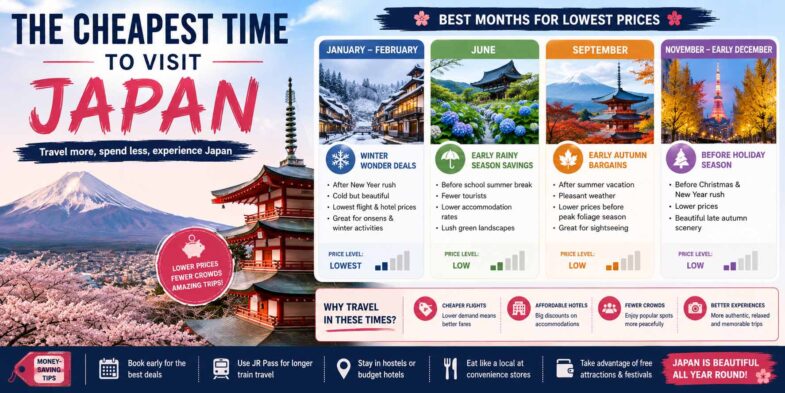
Cheapest Time to Visit Japan: Your Complete Budget Travel Guide
Dreaming of Japan but worried about the cost? The good news is that visiting doesn’t have to drain your travel budget. Knowing the cheapest time to visit Japan can save hundreds of dollars on flights, hotels, and even popular attractions. While Japan has a reputation for being expensive, careful timing makes it much more affordable without sacrificing an unforgettable experience.
This guide explains when prices are lowest, what to expect each season, and how to plan a budget-friendly trip that still includes Japan’s famous cities, culture, and food.
Cheapest Time to Visit Japan by Season
Travel prices in Japan change dramatically throughout the year.
Here’s a quick overview.
| Season | Cost | Crowds | Weather |
|---|---|---|---|
| Winter (January–February) | Lowest | Light | Cold |
| Spring (March–April) | Highest | Very Busy | Mild |
| Early Summer (May–June) | Low to Moderate | Moderate | Warm |
| Summer Holidays (July–August) | High | Busy | Hot & Humid |
| Autumn (October–November) | High | Busy | Cool & Pleasant |
| Early December | Moderate | Light | Cool |
For most travelers, January, February, and parts of June offer the best value.
When Is the Cheapest Time to Visit Japan?
If you’re asking when is the cheapest time to visit Japan, the answer is usually after the New Year holidays through late February.
During this period:
- International flight prices often drop.
- Hotel rates become more affordable.
- Tourist attractions are less crowded.
- Popular cities feel more relaxed.
The only exception is ski destinations such as Niseko and Hakuba, where winter is peak season.
Cheapest Time of Year to Visit Japan
The cheapest time of year to visit Japan generally falls into two travel windows.
Late January to February
This is often the lowest-priced period for most destinations.
Benefits include:
- Lower airfare
- Hotel discounts
- Shorter attraction lines
- Comfortable sightseeing in many cities
Potential drawbacks:
- Cold temperatures
- Shorter daylight hours
- Occasional snowfall in northern regions
Late May to Mid-June
After Golden Week ends, tourism slows.
You’ll often find:
- Better hotel availability
- Lower accommodation costs
- Reasonable flight prices
Keep in mind that June marks the beginning of the rainy season across much of Japan.
Monthly Budget Breakdown
January
Excellent for budget travelers after the holiday rush.
Average costs:
- Low airfare
- Discounted hotels
- Smaller crowds
February
One of the best months for saving money.
Highlights:
- Winter festivals
- Plum blossoms
- Lower accommodation prices
March
Prices begin increasing as cherry blossom season approaches.
April
One of the most expensive months due to sakura season.
Book several months in advance if visiting.
May
Golden Week creates high prices during the first week.
Costs usually fall afterward.
June
Good value returns.
Expect occasional rain but fewer tourists.
July and August
Domestic vacations increase prices.
Summer festivals attract many visitors.
September
Typhoon season may affect travel plans, although prices often improve compared to summer holidays.
October and November
Autumn colors attract large crowds.
Expect higher airfare and hotel rates.
December
Early December can offer reasonable prices before Christmas and New Year demand begins.
Cheapest Time to Visit Japan 2026
If you’re planning ahead, the cheapest time to visit Japan 2026 will likely follow the same seasonal pricing patterns seen in previous years.
While airfare and hotel rates always depend on demand, exchange rates, and global travel trends, these periods typically offer the best value:
- Late January
- February
- Late May
- June
- Early December
Booking flights three to six months ahead often increases your chances of securing lower fares.
Best and Cheapest Time to Visit Japan
Many travelers want the best and cheapest time to visit Japan, balancing pleasant weather with affordable prices.
For most visitors, late May and early June strike that balance.
Advantages include:
- Comfortable temperatures
- Manageable crowds
- Lower hotel prices
- Beautiful greenery
- Longer daylight hours
Although some rain is possible, many travelers find the savings worthwhile.
Budget-Friendly Destinations
Japan offers excellent value beyond its busiest tourist hubs.
Consider visiting:
Fukuoka
Known for affordable food and relaxed city life.
Nagoya
Often overlooked by international tourists, making hotel prices more reasonable.
Kanazawa
A beautiful city with historic districts, gardens, and fresh seafood.
Sendai
Offers a quieter experience while remaining well connected by rail.
Even in major cities, visiting during quieter months significantly reduces accommodation costs.
Saving Money in Tokyo
Tokyo doesn’t have to be expensive.
Travelers comparing seasons may also enjoy reading about the best time to visit tokyo, since seasonal events and hotel pricing often influence when to plan a trip.
Money-saving tips include:
- Stay near suburban train stations.
- Purchase convenience store meals occasionally.
- Visit free parks and temples.
- Use public transportation instead of taxis.
Transportation Tips
Japan’s transportation system is efficient but can become expensive.
Ways to save include:
- Reserve Shinkansen tickets early when possible.
- Compare regional rail passes.
- Use IC cards for local transit.
- Walk between nearby attractions.
If your itinerary stays within one city, unlimited daily subway passes can provide excellent value.
Accommodation on a Budget
Budget travelers have several affordable options.
Popular choices include:
- Business hotels
- Capsule hotels
- Hostels
- Guesthouses
- Budget chain hotels
Booking several months ahead often results in better prices, especially in popular cities.
Food Without Overspending
Japan offers outstanding meals at almost every price point.
Affordable options include:
- Ramen shops
- Udon restaurants
- Conveyor-belt sushi
- Bento boxes
- Convenience stores
- Local markets
Many lunch specials cost significantly less than dinner menus while offering similar quality.
Suggested Budget Itinerary
Here’s a simple one-week itinerary.
| Day | Destination |
| 1–3 | Tokyo |
| 4–5 | Kyoto |
| 6 | Osaka |
| 7 | Return to Tokyo or departure city |
If you’re planning your route, guides on how many days in kyoto can help you decide how long to stay before moving on to other destinations.
Likewise, reviewing how many days in osaka makes it easier to balance food, nightlife, and sightseeing without rushing.
Is Hiroshima Worth Adding?
Travelers with extra time often wonder whether Hiroshima deserves a place on their itinerary.
Reading is hiroshima worth visiting can help you decide if its historic sites, Peace Memorial Park, and nearby Miyajima Island fit your travel goals and budget.
For many visitors, Hiroshima adds meaningful cultural experiences beyond Japan’s largest cities.
Packing Tips by Season
Packing smart reduces unnecessary travel expenses.
Winter:
- Warm jacket
- Gloves
- Thermal layers
- Waterproof shoes
Spring and Autumn:
- Light jacket
- Comfortable walking shoes
- Umbrella
Summer:
- Breathable clothing
- Hat
- Sunscreen
- Reusable water bottle
Common Budget Mistakes
Many travelers accidentally spend more than necessary.
Avoid these mistakes:
- Booking during cherry blossom season without planning.
- Waiting too long to reserve hotels.
- Taking taxis instead of trains.
- Eating only in tourist districts.
- Ignoring regional destinations.
Small adjustments can significantly lower your overall travel costs.
Japan vs. Other Asian Destinations
Japan offers incredible value outside peak travel periods.
For travelers comparing destinations across Asia, researching the best month to visit thailand can provide useful perspective on seasonal pricing, weather, and crowd levels before deciding where to travel first.
Each destination has different peak seasons, so timing plays a major role in your budget.
Frequently Asked Questions
What is the cheapest month to visit Japan?
February is usually the least expensive month for flights and hotels outside ski resorts.
Is Japan cheaper during the rainy season?
Yes. Late May through June often brings lower accommodation prices and fewer tourists, although occasional rain is common.
How far in advance should I book?
Booking flights and hotels three to six months ahead usually provides the best combination of price and availability.
Is winter a good time to visit Japan?
Absolutely. Outside ski destinations, winter offers lower prices, smaller crowds, and unique seasonal attractions like hot springs and winter festivals.
Can Japan be affordable?
Yes. Traveling during low season, staying in business hotels, using public transportation, and eating at local restaurants can make Japan much more budget-friendly than many first-time visitors expect.
Plan Smart and Spend Less
Traveling to Japan doesn’t require a luxury budget. Choosing the right season, booking early, and focusing on affordable transportation and accommodations can dramatically reduce your costs. If your schedule is flexible, aim for late January, February, or early summer to enjoy lower prices without missing the country’s incredible culture, food, and scenery. With thoughtful planning, you’ll experience more while spending less.