
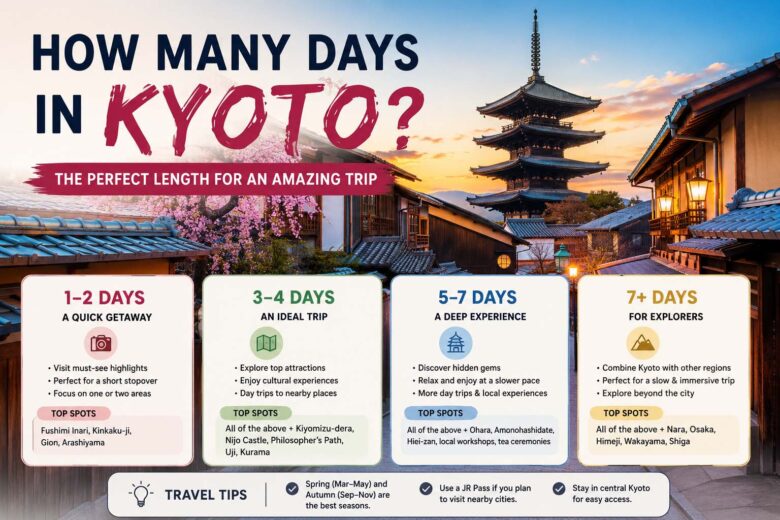
How Many Days in Kyoto? A Complete Guide to Planning the Perfect Trip
Kyoto is one of those cities that rewards slow travel. If you’re wondering how many days in Kyoto you should plan, the answer depends on your interests, your pace, and whether Kyoto is your only destination or part of a larger Japan itinerary. While you can see the city’s biggest highlights in two days, spending three or four days allows you to experience Kyoto beyond its famous temples and crowded streets.
As Japan’s former imperial capital, Kyoto blends centuries-old traditions with modern comforts. You’ll find peaceful bamboo forests, vibrant food markets, elegant tea houses, and historic neighborhoods all within easy reach. Many travelers also combine Kyoto with Tokyo or Osaka, making it one of the most popular stops on a first visit to Japan. If you’re still deciding when to plan your Japan trip, reading about the best time to visit tokyo can also help you choose the season that works best for both cities.
How Many Days in Kyoto Is Enough?
For most travelers, how many days in Kyoto comes down to one simple recommendation:
| Length of Stay | Best For | What You Can See |
|---|---|---|
| 2 Days | First-time visitors with limited time | Major temples, Gion, Fushimi Inari |
| 3 Days | Most travelers | Top attractions plus local neighborhoods |
| 4 Days | Relaxed sightseeing | Hidden temples, museums, gardens, day trips |
| 5+ Days | Slow travel lovers | Deep cultural experiences and nearby destinations |
If you’re asking how many days to spend in Kyoto, three days offers the best balance between sightseeing and enjoying the city’s atmosphere. You’ll have enough time to visit famous landmarks without rushing from place to place.
Those wondering how many days do you need in Kyoto often underestimate how much walking is involved. Many attractions deserve more than a quick photo stop, especially if you enjoy gardens, temples, or traditional Japanese culture.
Why Kyoto Deserves More Than a Quick Stop
Many visitors arrive expecting Kyoto to be simply a collection of temples. While the city certainly has thousands of them, its real charm lies in the neighborhoods between the famous landmarks.
A quiet morning in Higashiyama, an afternoon exploring Nishiki Market, or an evening walking through lantern-lit Gion often become the memories travelers cherish most.
Unlike some destinations where sightseeing feels rushed, Kyoto encourages a slower pace. Cafés overlook historic streets, riverside walking paths invite long strolls, and traditional inns create an experience that goes beyond checking attractions off a list.
Suggested Kyoto Itineraries
Two Days in Kyoto
Two days work well if you’re visiting Japan on a tight schedule.
Day 1
- Fushimi Inari Taisha early in the morning
- Kiyomizu-dera Temple
- Higashiyama District
- Yasaka Shrine
- Evening walk through Gion
Day 2
- Arashiyama Bamboo Grove
- Tenryu-ji Temple
- Monkey Park Iwatayama
- Nishiki Market
- Pontocho Alley for dinner
You’ll cover Kyoto’s most famous sights, although your schedule will be fairly busy.
Three Days in Kyoto
For many visitors, this is the ideal itinerary.
Along with the highlights above, dedicate your third day to:
- Kinkaku-ji (Golden Pavilion)
- Ryoan-ji Temple
- Kyoto Imperial Palace
- Philosopher’s Path (season permitting)
- Traditional tea ceremony
Three days let you appreciate Kyoto’s quieter side instead of spending every hour moving between attractions.
Four Days or Longer
If you’re deciding how many days should I spend in Kyoto, adding a fourth day creates much more flexibility.
Instead of rushing, you can:
- Visit lesser-known temples
- Explore local cafés
- Rent a bicycle
- Join a cooking class
- Experience a traditional ryokan stay
- Spend more time shopping for crafts and souvenirs
You’ll also have enough time to revisit favorite neighborhoods during quieter evening hours.
Best Time to Visit Kyoto
Kyoto changes dramatically throughout the year, and every season offers something different.
Spring (March to May)
Spring is Kyoto’s most famous season.
Cherry blossoms transform parks, riversides, and temple grounds into breathtaking landscapes. Temperatures are comfortable, making sightseeing enjoyable throughout the day.
Expect:
- Busy tourist crowds
- Higher hotel prices
- Advance reservations for accommodation
Summer (June to August)
Summer brings warm temperatures and high humidity.
June marks the rainy season, while July features Kyoto’s famous Gion Matsuri festival, one of Japan’s largest cultural celebrations.
Although afternoons can be hot, early mornings remain pleasant for temple visits.
Autumn (September to November)
Autumn rivals spring for beauty.
Brilliant red and golden maple leaves fill temple gardens, creating spectacular scenery throughout the city.
Winter (December to February)
Winter offers a quieter experience.
While temperatures are cool, snowfall occasionally creates unforgettable scenes around Kyoto’s historic temples.
Travelers who don’t mind colder weather often enjoy:
- Lower accommodation prices
- Smaller crowds
- Easier restaurant reservations
Weather and Climate
Kyoto experiences four distinct seasons.
| Season | Temperature | Travel Experience |
|---|---|---|
| Spring | 10–22°C (50–72°F) | Cherry blossoms and mild weather |
| Summer | 24–35°C (75–95°F) | Festivals and humid conditions |
| Autumn | 12–25°C (54–77°F) | Colorful foliage and comfortable temperatures |
| Winter | 1–10°C (34–50°F) | Quiet sightseeing and occasional snow |
If your travel dates are flexible, spring and autumn usually provide the most comfortable weather.
How Much Does a Kyoto Trip Cost?
Kyoto can suit nearly every budget.
Budget Travelers
Expect to spend around $70–120 USD per day.
This typically includes:
- Hostel accommodation
- Public transportation
- Affordable restaurants
- Free or low-cost attractions
Mid-Range Travelers
A comfortable budget ranges from $150–250 USD per day.
This usually covers:
- Three-star hotels
- Restaurant meals
- Attraction admissions
- Occasional taxis
Luxury Travelers
Luxury experiences often begin around $350 USD per day and can increase significantly if you stay in traditional luxury ryokans or dine at Michelin-starred restaurants.
Getting Around Kyoto
Kyoto is one of Japan’s easiest cities to explore.
Buses
The city bus network reaches nearly every major attraction.
Although buses become crowded during peak tourist seasons, they’re affordable and convenient.
Subway
Kyoto’s subway system is smaller than Tokyo’s but useful for moving between central districts.
Trains
JR trains connect Kyoto with nearby destinations including Osaka, Nara, and Kobe.
Many visitors also include Hiroshima after Kyoto. If you’re planning that route, deciding is hiroshima worth visiting can help you determine whether to add another stop to your itinerary.
Walking
Many historic neighborhoods are best explored on foot.
Walking allows you to discover hidden shrines, local cafés, artisan shops, and quiet streets that aren’t listed in most guidebooks.
Bicycle Rentals
Cycling has become increasingly popular among visitors.
Kyoto’s relatively flat streets and dedicated bike routes make bicycles an enjoyable way to cover more ground without relying entirely on public transport.
Where to Stay in Kyoto
Choosing the right neighborhood can make your trip smoother and help you spend less time commuting between attractions.
Gion
Gion is Kyoto’s most famous historic district. Staying here puts you close to traditional wooden buildings, tea houses, and many of the city’s best-known temples. It’s ideal for first-time visitors who want a classic Kyoto experience.
Downtown Kyoto
The downtown area around Kawaramachi offers excellent shopping, restaurants, nightlife, and easy access to public transportation. It’s a convenient base if you enjoy being in the heart of the city.
Arashiyama
If you prefer quieter surroundings, Arashiyama is a wonderful choice. Early mornings are especially peaceful before day-trippers arrive at the Bamboo Grove and nearby temples.
Kyoto Station Area
Travelers planning several day trips often stay near Kyoto Station. You’ll have direct access to trains, buses, and the Shinkansen, making it easy to explore other parts of Japan.
Must-Try Local Food
Kyoto has a culinary identity that’s quite different from Osaka’s famous street food scene. The city’s cuisine focuses on seasonal ingredients, delicate flavors, and beautifully presented dishes.
Some local specialties worth trying include:
- Kaiseki: A traditional multi-course dining experience featuring seasonal ingredients.
- Yudofu: Simple yet flavorful tofu simmered in a light broth, especially popular near temple districts.
- Matcha desserts: Kyoto’s Uji region produces some of Japan’s finest green tea, making matcha ice cream, cakes, and parfaits easy to find.
- Yatsuhashi: A famous Kyoto sweet made with rice flour, cinnamon, and sweet bean paste.
- Shojin Ryori: Buddhist vegetarian cuisine served at several temple restaurants.
For a casual meal, head to Nishiki Market, where you can sample local snacks while exploring one of Kyoto’s oldest food markets.
Packing Tips for Kyoto
Your packing list depends on the season, but a few essentials will make your visit more comfortable.
Spring and Autumn
Pack:
- Comfortable walking shoes
- Light jacket
- Umbrella
- Reusable water bottle
Summer
Bring:
- Breathable clothing
- Sunscreen
- Hat
- Portable fan
- Extra water bottle
Winter
Don’t forget:
- Warm coat
- Gloves
- Scarf
- Layers for changing temperatures
No matter when you visit, expect to walk several miles each day. Comfortable footwear is one of the most valuable things you can pack.
Family Travel in Kyoto
Kyoto isn’t just for history lovers. Families will find plenty of attractions that children enjoy.
Popular family-friendly experiences include:
- Arashiyama Monkey Park
- Kyoto Railway Museum
- Kyoto Aquarium
- Boat rides along the Hozugawa River
- Interactive cultural workshops
Many parks and temple grounds also provide open spaces where children can take a break from sightseeing.
Because Kyoto is clean, safe, and easy to navigate, it’s a comfortable destination for families traveling with young children.
Is Kyoto Good for Solo Travelers?
Absolutely.
Kyoto consistently ranks among Japan’s safest cities, making it an excellent destination for solo travelers.
You’ll find:
- Reliable public transportation
- Helpful tourist information centers
- Plenty of solo-friendly restaurants
- Capsule hotels and hostels designed for independent travelers
Many temples and gardens naturally encourage quiet exploration, making Kyoto especially rewarding if you enjoy traveling at your own pace.
Common Mistakes to Avoid
A little planning can help you avoid the most common travel frustrations.
Sleeping In
Popular attractions such as Fushimi Inari Shrine and Arashiyama Bamboo Grove become crowded by mid-morning.
Arriving before 8 a.m. often means fewer crowds and better photos.
Trying to Visit Too Many Temples
Kyoto has more than 1,500 temples. Instead of trying to see as many as possible, choose a handful that match your interests and spend time appreciating each one.
Ignoring Public Transportation
Taxis are convenient but can become expensive over several days. Buses, trains, and walking are usually the better choice.
Booking Accommodation Too Late
Hotels fill quickly during cherry blossom season and autumn foliage season. Reserving several months ahead often provides better prices and more options.
Underestimating Walking Distances
Even with public transportation, expect long days on your feet. Build in breaks for coffee, lunch, or simply relaxing in a garden.
Sample Three-Day Kyoto Budget
| Expense | Budget | Mid-Range | Luxury |
|---|---|---|---|
| Accommodation | $40–80 | $120–220 | $350+ |
| Food | $25–40 | $50–90 | $150+ |
| Transportation | $10–20 | $20–35 | $40+ |
| Attractions | $15–30 | $30–60 | $60+ |
| Daily Total | $90–170 | $220–405 | $600+ |
Your total cost depends on your travel style, but Kyoto offers excellent value compared with many major international destinations.
Frequently Asked Questions
How many days in Kyoto are ideal?
For most travelers, three days is the sweet spot. It gives you enough time to see the city’s famous landmarks while leaving room to explore quieter neighborhoods and enjoy Kyoto’s relaxed atmosphere.
How many days to stay in Kyoto if I’m visiting Japan for one week?
Three days in Kyoto and four days split between Tokyo or Osaka make a balanced one-week itinerary.
Is two days enough for Kyoto?
Yes, but you’ll need to prioritize the major attractions. A two-day visit is perfect if you’re combining Kyoto with several other destinations in Japan.
Is four or five days too much?
Not at all. Travelers interested in Japanese culture, photography, gardens, food, or traditional experiences often appreciate having extra time. A longer stay also allows for slower mornings and less rushed sightseeing.
Should I stay in Kyoto or Osaka?
Kyoto offers a quieter, more traditional atmosphere, while Osaka is known for nightlife and street food. Many visitors choose to stay in Kyoto for several nights and visit Osaka as an easy day trip.
If you’re planning future European city breaks after Japan, comparing trip lengths such as how many days in paris, how many days in lisbon, or how many days in prague can also help you build balanced itineraries that avoid feeling rushed.
Plan Your Kyoto Trip with Confidence
Deciding how many days in Kyoto really comes down to the kind of trip you want. If your goal is simply to see the famous landmarks, two days can work. For most visitors, though, three days offers the right mix of sightseeing, local experiences, and time to slow down. If your schedule allows, staying four or five days lets you enjoy Kyoto beyond the postcard views, whether that’s joining a tea ceremony, wandering peaceful backstreets, or discovering neighborhood cafés.
Whatever length of stay you choose, try not to rush from one attraction to the next. Kyoto is a city that reveals its character gradually, and some of its best moments happen when you step away from the busiest sights and simply enjoy the atmosphere. With a little planning and a flexible itinerary, you’ll leave with a deeper appreciation for one of Japan’s most memorable destinations