
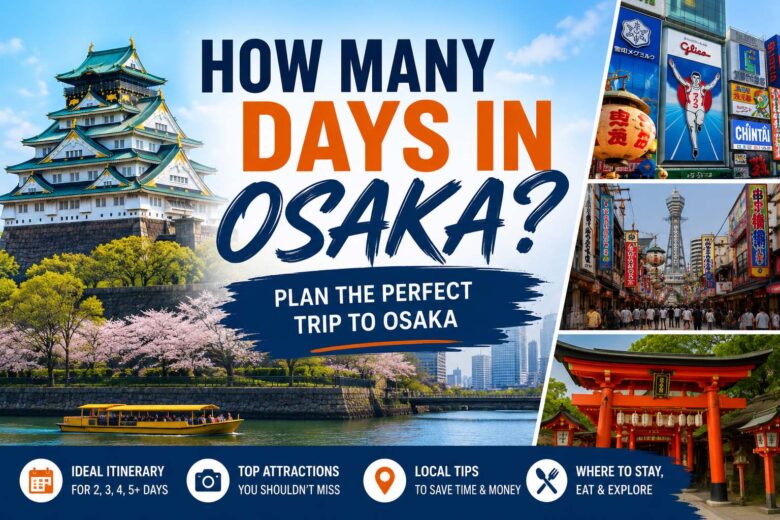
How Many Days in Osaka? A Complete Guide to Planning Your Trip
If you’re wondering how many days in Osaka is enough, the short answer is 2 to 4 days. Two days gives you enough time to see the city’s highlights, while three or four days allows you to explore neighborhoods at a relaxed pace, enjoy day trips, and experience Osaka’s famous food culture.
The ideal length of your stay depends on your travel style. Some visitors use Osaka as a base for exploring western Japan, while others spend several days discovering its lively streets, historic landmarks, and entertainment districts.
How Many Days in Osaka Is Best?
The answer depends on what you want from your trip.
Here’s a quick guide:
| Length of Stay | Best For | Experience |
|---|---|---|
| 1 Day | Stopover travelers | Main attractions only |
| 2 Days | First-time visitors | Major sights and food experiences |
| 3 Days | Most travelers | Balanced sightseeing and shopping |
| 4 Days | Relaxed travel | Museums, neighborhoods, and day trips |
| 5+ Days | Regional exploration | Osaka plus nearby cities |
For most people, 3 days offers the best balance between sightseeing and relaxation.
How Many Days Should I Spend in Osaka?
If Osaka is your main destination, spending three full days gives you enough time to enjoy the city’s biggest attractions without rushing.
During that time you can:
- Visit Osaka Castle
- Walk through Dotonbori
- Explore Shinsekai
- Shop in Shinsaibashi
- Experience Kuromon Market
- Visit Umeda Sky Building
- Enjoy local street food
- Spend time at Osaka Aquarium Kaiyukan
You’ll also have flexibility if weather changes your plans.
How Many Days Do You Need in Osaka Based on Your Travel Style?
Different travelers often need different amounts of time.
First-Time Visitors
Two to three days is usually perfect.
You’ll have enough time to experience Osaka’s famous neighborhoods while still enjoying local cuisine and nightlife.
Food Lovers
Three or four days allows you to sample Osaka’s reputation as “Japan’s Kitchen.”
Popular foods include:
- Takoyaki
- Okonomiyaki
- Kushikatsu
- Ramen
- Fresh seafood
- Japanese cheesecake
Instead of rushing through meals, you’ll have time to discover neighborhood restaurants alongside famous dining streets.
Families
Families often appreciate three or four days.
Children enjoy attractions like:
- Osaka Aquarium Kaiyukan
- Universal Studios Japan
- Tempozan Harbor Village
- Kids Plaza Osaka
Adding extra time keeps the itinerary comfortable without feeling rushed.
Budget Travelers
If you’re traveling on a tighter budget, two days can still provide an excellent introduction to Osaka.
Many attractions are inexpensive or free, including:
- Dotonbori
- Osaka Castle Park
- Nakanoshima Park
- Shinsaibashi Shopping Street
- Shinsekai
Walking between nearby neighborhoods also helps reduce transportation costs.
Suggested Itinerary for 2 Days in Osaka
If you only have two days, focus on the city’s highlights.
Day 1
Morning:
- Osaka Castle
- Castle Park
Afternoon:
- Kuromon Market
- Nipponbashi
Evening:
- Dotonbori
- Shinsaibashi
- Street food dinner
This first day combines history, shopping, and Osaka’s famous nightlife.
Day 2
Morning:
- Osaka Aquarium Kaiyukan
Afternoon:
- Tempozan Harbor
- Ferris Wheel
Evening:
- Umeda Sky Building
- Umeda shopping district
This itinerary introduces many of Osaka’s most famous attractions while keeping travel times manageable.
Three-Day Osaka Itinerary
For many visitors, this is the ideal schedule.
Day 1: Historic Osaka
Spend the day exploring:
- Osaka Castle
- Osaka Museum of History
- Castle gardens
- Local cafés
Day 2: Modern Osaka
Visit:
- Dotonbori
- Shinsaibashi
- Amerikamura
- Namba
This day highlights Osaka’s modern culture, shopping, and nightlife.
Day 3: Entertainment
Choose one major attraction:
- Universal Studios Japan
- Osaka Aquarium
- Sumiyoshi Taisha
- Umeda district
You’ll finish your visit with a mix of sightseeing and relaxation.
If your itinerary also includes nearby cities, planning how many days in Kyoto before finalizing your route can help you divide your time efficiently between Japan’s historic and modern attractions.
How Many Days in Osaka and Kyoto?
Many travelers combine these two cities into one vacation.
A balanced itinerary is:
- Osaka: 3 days
- Kyoto: 3 days
This allows you to experience two very different sides of Japan.
Osaka offers:
- Modern entertainment
- Nightlife
- Shopping
- Street food
Kyoto focuses on:
- Historic temples
- Traditional gardens
- Tea houses
- Cultural landmarks
Because the cities are only about 15–30 minutes apart by train, many visitors stay in one city while taking day trips to the other.
Must-See Attractions Worth Your Time
When deciding how long to stay, these attractions deserve consideration.
Osaka Castle
One of Japan’s most recognizable landmarks, Osaka Castle combines impressive architecture with surrounding gardens that are especially beautiful during cherry blossom season.
Although the current structure is a reconstruction, the museum inside provides fascinating insight into the city’s history.
Dotonbori
No first visit feels complete without seeing Dotonbori.
Bright neon lights, giant restaurant signs, canal views, and endless food stalls create one of Japan’s most energetic entertainment districts.
Even travelers who don’t enjoy shopping often spend several hours simply walking through the area.
Kuromon Market
Often called “Osaka’s Kitchen,” this market is an excellent place to sample local specialties.
You’ll find:
- Fresh sushi
- Wagyu beef
- Seasonal fruit
- Seafood
- Japanese sweets
Morning is generally the best time to visit before crowds become heavier.
Umeda Sky Building
This unique skyscraper offers panoramic views across Osaka from its Floating Garden Observatory.
Visiting near sunset provides spectacular views as the city transitions from daylight to its famous nighttime skyline.
Universal Studios Japan
If theme parks are a priority, plan an entire day here.
Popular attractions include:
- Super Nintendo World
- The Wizarding World of Harry Potter
- Jurassic Park rides
- Seasonal events
Tickets often sell out during busy travel periods, so booking ahead is recommended.
Best Time to Visit Osaka
Osaka is a year-round destination, but each season offers a different experience.
| Season | Weather | Why Visit |
|---|---|---|
| Spring (March–May) | Mild | Cherry blossoms and comfortable sightseeing |
| Summer (June–August) | Hot and humid | Festivals, fireworks, and lively nightlife |
| Autumn (September–November) | Cool and pleasant | Colorful foliage and ideal walking weather |
| Winter (December–February) | Cool | Fewer crowds and seasonal illuminations |
Spring and autumn are generally considered the best seasons because temperatures are comfortable for exploring on foot.
If your trip also includes Japan’s capital, checking the best time to visit Tokyo can help you choose dates that work well for both cities.
Transportation Around Osaka
One reason Osaka is easy to visit is its excellent public transportation.
The city’s rail and subway systems connect nearly every major attraction.
Popular options include:
- Osaka Metro
- JR Loop Line
- Private railway companies
- Local buses
- Taxis
For most visitors, purchasing an IC card such as ICOCA makes traveling much easier. You simply tap in and out instead of buying individual tickets.
Walking is also part of the experience, especially in neighborhoods like Dotonbori, Namba, and Shinsaibashi.
Where to Stay in Osaka
Choosing the right neighborhood can save both time and money.
Namba
Best for:
- First-time visitors
- Nightlife
- Street food
- Shopping
Many major attractions are within walking distance.
Umeda
Ideal for:
- Business travelers
- Easy train connections
- Luxury hotels
- Department stores
Umeda is also a convenient base for day trips.
Shin-Osaka
Best for travelers using the Shinkansen (bullet train).
While it has fewer attractions, transportation connections are excellent.
Osaka Bay Area
A good choice if your plans include:
- Universal Studios Japan
- Osaka Aquarium Kaiyukan
- Family-friendly attractions
How Much Does an Osaka Trip Cost?
Your budget depends on your travel style.
| Travel Style | Estimated Daily Budget (Per Person) |
|---|---|
| Budget | $70–$120 |
| Mid-range | $150–$250 |
| Luxury | $300+ |
Typical daily expenses include:
- Accommodation
- Transportation
- Meals
- Attraction tickets
- Shopping
Many attractions are inexpensive, making a good value compared with some other major cities.
Day Trips Worth Adding
If you have four or more days, consider exploring nearby destinations.
Nara
Just under an hour away, Nara is famous for:
- Friendly deer
- Historic temples
- Peaceful parks
- Traditional atmosphere
Kobe
Known for:
- Kobe beef
- Harbor views
- Mount Rokko
- Stylish shopping streets
Hiroshima
If you have extra time, taking the Shinkansen to Hiroshima offers a meaningful historical experience alongside beautiful scenery. Before adding it to your itinerary, reading is Hiroshima worth visiting can help you decide whether it matches your travel interests.
Packing Tips for Osaka
Your packing list depends on the season.
Bring:
- Comfortable walking shoes
- Lightweight daypack
- Portable phone charger
- Reusable water bottle
- Travel umbrella
- Weather-appropriate clothing
During summer, breathable fabrics are especially helpful because humidity can be high.
In winter, a warm jacket is usually enough, although temperatures occasionally drop close to freezing.
Common Mistakes to Avoid
A little planning can make your visit much smoother.
Trying to See Everything
Osaka has enough attractions to fill an entire week.
Rather than rushing between landmarks, focus on the places that interest you most.
Underestimating Walking Distances
Although public transportation is excellent, you’ll still spend plenty of time walking through stations and neighborhoods.
Comfortable shoes are essential.
Skipping Local Food
Osaka is famous throughout Japan for its street food and casual dining.
Don’t limit yourself to international chains when local restaurants offer memorable meals.
Visiting Universal Studios Without Planning
Purchase tickets in advance and check opening times before you go, especially during holidays and school vacations.
Frequently Asked Questions
How many days in Osaka is enough?
For most travelers, two to four days is ideal. Two days covers the major highlights, while three or four days allows for a more relaxed pace and optional day trips.
Is two days enough for Osaka?
Yes. Two days gives you enough time to visit famous attractions such as Castle, Dotonbori, Kuromon Market, and Umeda while enjoying the city’s food scene.
How many days should I spend in Osaka and Kyoto?
A popular itinerary is three days in Osaka and three days in Kyoto. This gives you time to experience both cities without feeling rushed.
Can Osaka be a day trip?
Yes, especially from Kyoto. However, staying at least one or two nights lets you experience after dark, when districts like Dotonbori are at their most vibrant.
Is Osaka expensive?
Osaka can suit a wide range of budgets. Budget travelers can save money by using public transportation, staying in business hotels or hostels, and enjoying affordable local eateries.
Is Osaka family-friendly?
Yes. Families will find plenty to enjoy, including Universal Studios Japan, Aquarium Kaiyukan, parks, museums, and interactive attractions for children.
Make the Most of Your Osaka Adventure
For most visitors, how many days in Osaka comes down to one simple recommendation: plan for three days if your schedule allows. That gives you enough time to experience the city’s famous food, vibrant neighborhoods, historic landmarks, and modern attractions without feeling like you’re constantly rushing from place to place.
If you’re building a longer Japan itinerary, combine with Kyoto, Nara, Kobe, or Hiroshima to experience different sides of the Kansai region. Whether you’re traveling solo, with family, or as a couple, leaving a little flexibility in your schedule often leads to the most memorable experiences.