
Is Malta Worth Visiting? A Complete Guide to Attractions, Costs, Best Time to Go, and Travel Tips
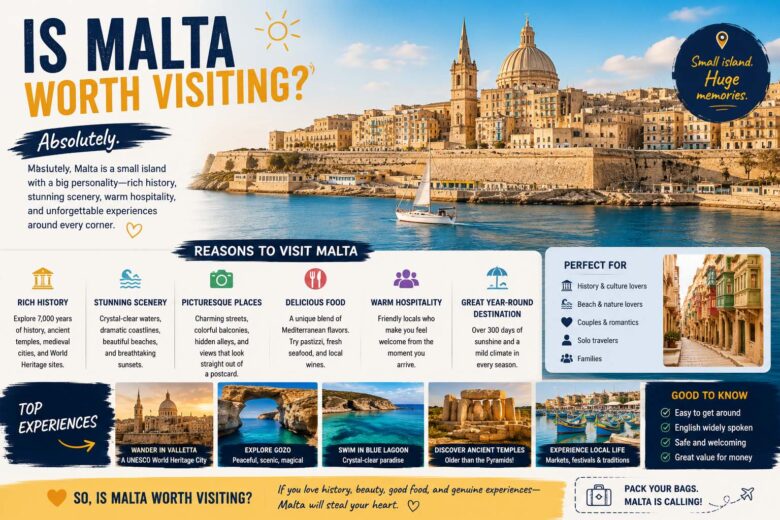
If you’re asking is Malta worth visiting, the short answer is yes. This Mediterranean island nation offers far more than beautiful beaches. You’ll find centuries-old cities, crystal-clear swimming spots, impressive forts, fresh seafood, and a relaxed island atmosphere—all within a relatively compact destination that’s easy to explore.
Whether you’re planning a summer beach escape, a cultural city break, or a winter getaway with mild weather, Malta has something for almost every type of traveler. The combination of history, sunshine, and affordability compared with many European destinations makes it a popular choice year-round.
Is Malta Worth Visiting for Different Types of Travelers?
Malta appeals to a surprisingly wide range of visitors because it combines history, outdoor activities, and coastal scenery in one destination.
Couples
Romantic waterfront dinners, boutique hotels, sunset cruises, and charming old streets make Malta ideal for couples looking for a relaxed Mediterranean escape.
Families
Families appreciate Malta’s short travel distances, calm beaches, water parks, and historic attractions. Many beaches have shallow water, making them suitable for children.
Solo Travelers
Solo travelers often find Malta easy to navigate. English is one of the country’s official languages, public transportation is affordable, and the island feels welcoming to international visitors.
History Lovers
Few places pack so much history into such a small area. Malta has prehistoric temples older than the pyramids, medieval cities, Baroque architecture, and World War II landmarks.
Is Valletta Malta Worth Visiting?
If you’re wondering is Valletta Malta worth visiting, absolutely.
Valletta, Malta’s capital city, is one of Europe’s smallest capitals, yet it’s packed with attractions. The entire city is a UNESCO World Heritage Site thanks to its remarkable architecture and historical significance.
Highlights include:
- St. John’s Co-Cathedral
- Upper Barrakka Gardens
- Grand Harbour viewpoints
- Fort St. Elmo
- National Museum of Archaeology
- Charming cafés and rooftop restaurants
Travelers who enjoy historic European capitals may also enjoy reading Is Geneva Worth Visiting to compare another compact city known for its scenic setting and cultural attractions.
What Makes Malta Special?
Unlike many Mediterranean destinations that focus mainly on beaches, Malta blends several experiences into one vacation.
You’ll find:
- Ancient temples
- Medieval streets
- Blue lagoons
- Dramatic sea cliffs
- Excellent diving sites
- Traditional fishing villages
- Local festivals throughout the year
Since the islands are relatively small, you can visit multiple attractions without spending hours traveling.
Best Things to Do in Malta
Explore Valletta
Walking through Valletta feels like stepping into an open-air museum. Narrow streets, limestone buildings, colorful balconies, and sea views appear around almost every corner.
Take time to stop at local cafés and simply enjoy the atmosphere.
Swim at the Blue Lagoon
Located on the tiny island of Comino, the Blue Lagoon is famous for its crystal-clear turquoise water.
Arrive early during summer because it becomes one of Malta’s busiest attractions.
Visit Mdina
Known as the Silent City, Mdina was Malta’s medieval capital.
Its quiet streets, stone buildings, and panoramic views make it one of the country’s most memorable places to explore.
Discover Gozo
Gozo offers a slower pace than Malta’s main island.
Visitors enjoy scenic hiking trails, beautiful beaches, traditional villages, and excellent snorkeling opportunities.
See the Blue Grotto
Boat tours take visitors into spectacular sea caves where sunlight creates brilliant shades of blue beneath the water.
Morning usually offers the calmest conditions.
Is Malta Worth Visiting? Seasonal Travel Guide
The answer often depends on what kind of trip you’re planning.
| Season | Weather | Best For |
|---|---|---|
| Spring (March–May) | Warm and pleasant | Sightseeing, hiking, fewer crowds |
| Summer (June–August) | Hot and sunny | Beaches, swimming, nightlife |
| Autumn (September–November) | Warm sea and mild temperatures | Swimming and sightseeing |
| Winter (December–February) | Mild with occasional rain | Culture, city breaks, lower prices |
Spring and autumn are often considered the best balance of pleasant weather and manageable crowds.
Is Malta Worth Visiting in December?
Many travelers ask is Malta worth visiting in December because they’re looking for winter sun without flying long distances.
December won’t be warm enough for most beach holidays, yet it’s excellent for sightseeing.
Advantages include:
- Smaller crowds
- Lower hotel prices
- Christmas decorations
- Comfortable walking weather
- Easier restaurant reservations
Expect daytime temperatures around 15–18°C (59–64°F), although evenings can feel cool.
How Many Days Should You Spend in Malta?
A four- to six-day trip works well for most travelers.
Here’s a simple itinerary:
| Days | Suggested Activities |
| Day 1 | Explore Valletta |
| Day 2 | Mdina and Rabat |
| Day 3 | Blue Lagoon and Comino |
| Day 4 | Gozo Island |
| Day 5 | Beaches and coastal walks |
| Day 6 | Museums, shopping, or harbor cruise |
If you’re comparing city breaks around Europe, you may also enjoy reading is zurich worth visiting, especially if you’re deciding between a cultural city destination and a Mediterranean island vacation.
How Expensive Is Malta?
Compared with many Western European destinations, Malta offers good value.
Approximate daily costs:
Budget Travelers
- €60–90 per day
- Hostels
- Public buses
- Casual restaurants
Mid-Range Travelers
- €120–220 per day
- Boutique hotels
- Guided tours
- Nice restaurants
Luxury Travelers
- €300+ per day
- Five-star resorts
- Private boat tours
- Fine dining
Accommodation prices rise noticeably during July and August.
Getting Around Malta
One reason many visitors enjoy Malta is how easy it is to explore.
Options include:
- Public buses
- Rental cars
- Ferries
- Ride-sharing services
- Walking within historic towns
Driving is on the left-hand side of the road, which may take some adjustment for visitors from many countries.
Public buses connect nearly every major attraction, making them an affordable choice.
What to Eat in Malta
Malta’s cuisine combines Mediterranean and Italian influences with local traditions.
Popular dishes include:
- Pastizzi (flaky pastries filled with ricotta or peas)
- Rabbit stew
- Fresh seafood
- Ftira bread sandwiches
- Lampuki fish when in season
- Local cheeses
- Traditional pastries
Don’t miss waterfront restaurants serving freshly caught fish.
Safety Tips for Visiting Malta
Malta ranks among Europe’s safer travel destinations.
Even so, basic precautions are still wise.
- Keep valuables secure in busy tourist areas.
- Wear sunscreen during summer.
- Stay hydrated while sightseeing.
- Book popular attractions in advance during peak season.
- Wear comfortable shoes for uneven stone streets.
Solo travelers generally report feeling comfortable exploring Malta, especially in popular tourist areas.
Common Mistakes Travelers Make
Visiting Only Valletta
While Valletta deserves your time, Gozo, Mdina, and Comino showcase completely different sides of Malta.
Underestimating the Sun
Even during spring, Mediterranean sunshine can be surprisingly strong.
Bring sunscreen, sunglasses, and a refillable water bottle.
Waiting Too Long to Book Summer Hotels
Accommodation fills quickly during peak season.
Booking several months ahead often results in better prices and more choices.
Skipping Local Villages
Smaller towns often provide the most authentic experiences, especially during local festivals.
Travelers researching compact European destinations sometimes compare Malta with cities like Belgium’s capital. If that’s on your list, our guide on is brussels worth visiting offers another perspective for planning your next trip.
Malta Compared with Other European Destinations
Malta stands out because it combines beaches, history, and mild weather in a relatively small area.
Unlike larger countries where long train journeys are common, many of Malta’s main attractions are less than an hour apart.
If your travel style leans toward modern skylines and business-focused cities, you may also want to compare Malta with our guide on is frankfurt worth visiting before deciding on your next European adventure.
For travelers considering North American city breaks instead of Europe, our article on is montreal worth visiting highlights a completely different cultural experience with French-Canadian influences.
Frequently Asked Questions
Is Malta worth visiting?
Yes. Malta offers excellent weather, fascinating history, beautiful coastlines, and easy transportation, making it one of the Mediterranean’s most rewarding destinations.
Is it worth visiting Malta for just a few days?
Yes. Even a three- or four-day trip allows you to explore Valletta, Mdina, and at least one coastal attraction.
Is Malta expensive?
Malta is generally more affordable than destinations such as Switzerland, France, or Scandinavia, especially if you travel outside peak summer.
What is the best month to visit Malta?
May, June, September, and October usually provide warm weather with fewer crowds than midsummer.
Do people speak English in Malta?
Yes. English is an official language, so communication is easy for most international visitors.
Is Malta good for beaches?
Absolutely. Malta offers sandy beaches, rocky coves, snorkeling spots, diving locations, and famous swimming areas like the Blue Lagoon.
Should Malta Be on Your Travel List?
If you’re still asking is Malta worth visiting?, the answer depends on what you enjoy—but for most travelers, it’s an easy yes. Malta combines Mediterranean sunshine, fascinating history, scenic coastlines, and welcoming towns in a destination that’s easy to explore without covering long distances.
Whether you’re wandering through Valletta’s historic streets, swimming in turquoise waters around Comino, or enjoying fresh seafood by the harbor, Malta delivers experiences that appeal to couples, families, solo travelers, and history enthusiasts alike. Plan at least four days if possible, travel during spring or autumn for the best balance of weather and crowds, and leave enough time to discover both Malta and Gozo for a well-rounded island adventure.